
The printing industry stands at a critical inflection point. With global print waste exceeding 62 million metric tons annually, creative entrepreneurs and print shop owners face increasing pressure to adopt sustainable practices that align with both environmental responsibility and sound business strategy. The transition from traditional linear production models to circular economy frameworks represents more than an ethical choice. It has become a competitive necessity.
This shift requires print professionals to rethink every stage of production, from material sourcing and equipment selection to waste management and client relationships. For small to medium sized businesses in the print sector, understanding these sustainable practices is essential for long term viability and market differentiation.
Understanding the Circular Economy in Print Production
The circular economy model fundamentally challenges the conventional "take, make, waste" approach that has dominated manufacturing for decades. Instead, it emphasizes resource recovery, waste reduction, and extended product lifecycles. For print production facilities, this translates into practical strategies that keep materials in use for as long as possible while extracting maximum value at every stage.
According to the Printing Industries of America, sustainable print practices have evolved from optional marketing differentiators to core operational requirements. The organization has documented significant industry momentum toward environmental certification programs and standardized sustainability metrics that help print shops measure and communicate their environmental performance.
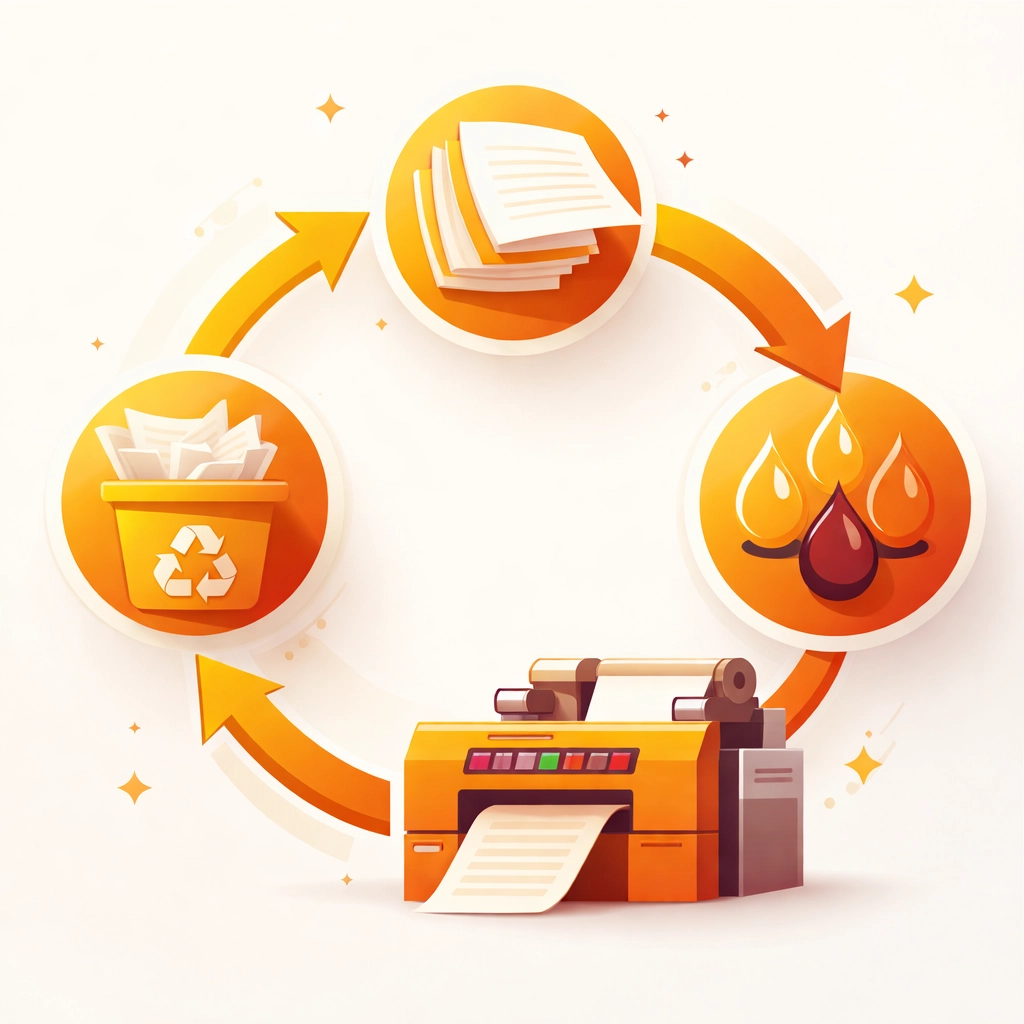
The circular approach in printing encompasses three primary areas: input materials, production processes, and end of life management. Each area presents opportunities for print shops to reduce environmental impact while simultaneously improving operational efficiency and reducing costs.
Core Sustainable Practices for Modern Print Shops
Material Selection and Sourcing
The foundation of sustainable print production begins with thoughtful material selection. Post consumer recycled paper, commonly referred to as PCR paper, has become increasingly available in grades suitable for commercial printing applications. Similarly, papers certified by the Forest Stewardship Council provide assurance that fiber sources meet rigorous environmental and social standards.
Ink technology has also advanced significantly. Soy based and vegetable based inks offer reduced volatile organic compound emissions compared to traditional petroleum based formulations. These alternatives also facilitate easier deinking during the paper recycling process, supporting the broader circular economy infrastructure.
For print shops serving retail consumers and small businesses, communicating these material choices builds trust and reinforces brand values. Many clients actively seek vendors who can demonstrate environmental responsibility through verified material sourcing practices.
Equipment Lifecycle Management
Modern print operations increasingly recognize the environmental and financial benefits of extended equipment lifecycles. Rather than replacing devices at the first sign of decreased performance, leading organizations now invest in remanufactured and refurbished equipment that meets original equipment manufacturer specifications.
This approach reduces demand for virgin materials in manufacturing while keeping functional equipment out of waste streams. Proactive maintenance programs, remote monitoring capabilities, and predictive maintenance technologies help print shops maximize the productive lifespan of their capital investments.
Fleet management strategies that incorporate automatic duplex printing defaults and secured print release features also contribute to resource conservation. These operational adjustments reduce paper consumption without compromising output quality or client satisfaction.
Consumables and Closed Loop Systems
Toner cartridges and ink containers represent a significant waste stream in print operations. Closed loop recycling programs offered by major manufacturers allow print shops to return used consumables for reprocessing and reintegration into the supply chain.
Refillable ink systems provide another avenue for waste reduction, particularly for wide format and specialty printing applications. By allowing repeated use of the same cartridge housing, these systems dramatically reduce plastic waste while often delivering cost savings compared to single use alternatives.
Print shops that participate in manufacturer takeback programs can often document their recycling volumes for sustainability reporting purposes, providing tangible metrics for clients who require environmental performance data from their vendors.
Strategic Implementation Considerations
Design Phase Integration
Sustainable print production begins before any substrate hits the press. Design decisions made early in the project lifecycle significantly influence environmental outcomes downstream. Print professionals should work with clients to incorporate circular principles from the concept stage.
This includes specifying recyclable substrates, avoiding problematic coatings or laminations that complicate recycling, and designing for efficient sheet utilization to minimize trim waste. For projects requiring packaging or structural components, designing for disassembly ensures materials can be separated and recycled at end of life.
Creative Design Hub works with clients to integrate these considerations into project planning. Our portfolio demonstrates how thoughtful design choices can achieve both aesthetic excellence and environmental responsibility.

Production Optimization
Print on demand and short run digital printing technologies offer inherent sustainability advantages by eliminating overproduction. Unlike traditional offset runs that often require minimum quantities to achieve cost efficiency, digital production allows precise matching of print quantities to actual demand.
This capability proves particularly valuable for retail businesses and creative entrepreneurs who may have uncertain demand forecasts or frequently changing marketing materials. By printing only what is needed when it is needed, these operations avoid the waste associated with obsolete inventory.
Energy consumption during production also merits attention. Modern digital presses generally consume less energy per impression than legacy equipment, while improved RIP software reduces processing time and associated energy use. Print shops should evaluate total energy consumption across their equipment fleet and consider efficiency upgrades where return on investment calculations support the transition.
Supply Chain and Logistics
Sustainable practices extend beyond the production floor to encompass packaging, delivery, and return logistics. Reducing packaging materials, using recycled content in shipping supplies, and optimizing delivery routes all contribute to lower environmental impact.
For print shops serving local markets, promoting pickup options or consolidated deliveries can further reduce transportation related emissions. These operational choices, when communicated effectively, reinforce sustainability messaging and build client loyalty.
Business Benefits and Return on Investment
Adopting circular economy practices delivers measurable business advantages beyond environmental impact reduction. Efficient material use and waste elimination translate directly to cost savings. Print shops that optimize substrate utilization, reduce consumable waste, and extend equipment lifecycles improve their margin performance.
Market differentiation represents another significant benefit. As sustainability awareness grows among retail consumers and business clients alike, print shops with verified environmental credentials gain competitive advantages in vendor selection processes. Many corporate clients now require sustainability documentation from their supply chain partners.

According to industry research documented by the Printing Industries of America, print shops with robust sustainability programs report enhanced customer loyalty and improved employee engagement. These factors contribute to reduced client acquisition costs and lower workforce turnover, both of which support long term profitability.
Future Outlook and Industry Trajectory
The printing industry continues to evolve toward more sustainable practices. Industry analysts project 50 percent reduction targets in primary raw material consumption by 2030, with biodegradable substrates and advanced recycling technologies enabling these ambitious goals.
Artificial intelligence and automation technologies promise further waste reduction through optimized production scheduling, predictive quality control, and dynamic resource allocation. Print shops that invest in these capabilities position themselves advantageously for future regulatory requirements and client expectations.
For creative entrepreneurs and print shop owners navigating this transition, the path forward requires balancing environmental responsibility with business sustainability. The most successful operations will integrate circular economy principles throughout their workflows while maintaining the quality and service standards their clients expect.
To explore how sustainable print practices can support your business objectives, visit our information page or review our frequently asked questions for additional guidance.
Works Cited
Printing Industries of America. (2024). Sustainable print production: Industry guidelines and best practices. Printing Industries of America.
PRINTING United Alliance. (2024). Circular economy strategies for the printing industry [Industry report]. PRINTING United Alliance.
Environmental Paper Network. (2023). State of the global paper industry: Toward sustainable production. Environmental Paper Network.
Forest Stewardship Council. (2024). FSC certification standards for paper and print products. FSC International.
U.S. Environmental Protection Agency. (2024). Sustainable materials management in printing operations [Technical guidance document]. EPA Office of Resource Conservation and Recovery.
Recent Comments