
The print industry landscape in 2026 presents entrepreneurs with more pathways to market entry than ever before. Understanding your equipment investment and calculating realistic ROI timelines requires analyzing multiple cost variables that extend far beyond the price tag on machinery. The following insights provide strategic guidance for print shop startups navigating capital allocation decisions.
Business Model Selection Drives Capital Requirements
Your initial capital needs vary dramatically based on your chosen business model. Traditional full-service print shops require between $10,000 and $250,000 in startup capital, encompassing equipment, space, and operational reserves (PRINTING United Alliance, 2025). This substantial range reflects differences in production capacity, equipment sophistication, and service offerings.
Conversely, print-on-demand operations can launch with investments as modest as $150 to $300. POD businesses eliminate inventory risk and reduce equipment needs by leveraging third-party fulfillment. However, this model sacrifices margin control and production oversight. Your choice between traditional and POD models fundamentally shapes your financial structure and growth trajectory.

Equipment Purchases Dominate Initial Expenditures
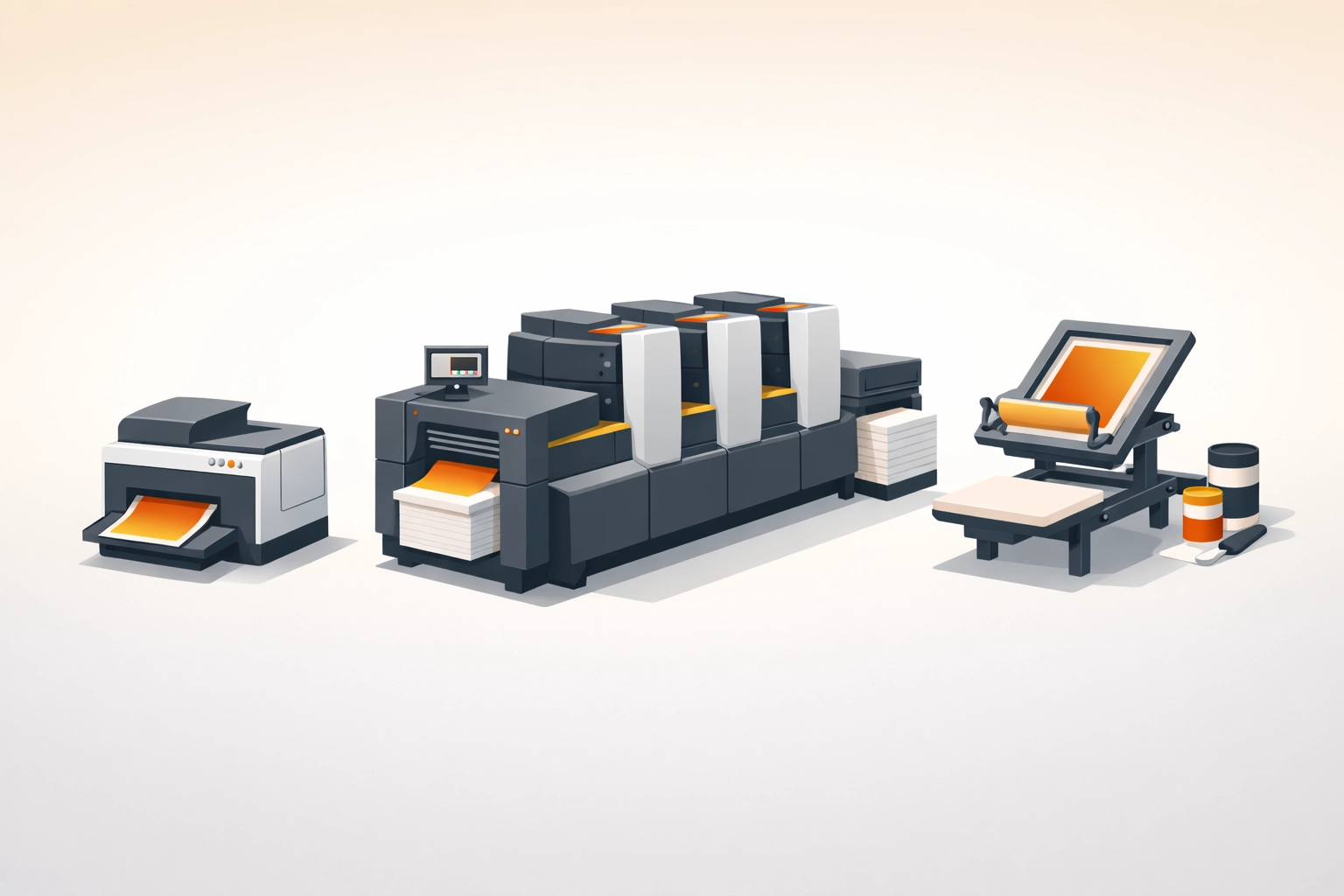
Equipment represents the single largest line item in most print shop budgets. Digital printers suitable for commercial applications range from $5,000 to $50,000, depending on speed, color capabilities, and media handling. Offset presses command $50,000 to $250,000, justified primarily in high-volume operations where per-unit costs decrease significantly (Print Industries Market Information and Research Organization, 2026).
Screen printing equipment offers the most accessible entry point at $2,000 to $20,000 for complete setups. This technology remains relevant for specific applications, particularly textile printing and specialty substrates. Equipment selection should align with your target market rather than attempting to serve all segments simultaneously. Specialization typically accelerates profitability.
Leasing Versus Purchasing Requires Strategic Analysis
Printer leasing arrangements typically cost $200 to $600 monthly, preserving working capital during the critical early months. This approach provides predictable expenses and often includes maintenance agreements that reduce operational risk. Leasing makes sense when technology obsolescence concerns outweigh ownership benefits.
However, the mathematics reveal important considerations. A 36-month lease often equals the total purchase price of equipment. Beyond this period, ownership generates superior returns. Calculate your projected production volume and equipment lifespan before committing to either path. Businesses with established customer bases and predictable volume often benefit from purchasing, while startups testing market demand may prefer leasing flexibility.
Operating Expenses Extend Beyond Equipment Costs
Monthly operational costs significantly impact your ROI timeline and cash flow requirements. Budget $500 to $1,500 monthly for consumables including ink, toner, maintenance supplies, and electricity (Small Business Administration, 2025). These recurring expenses scale with production volume, making them partially variable but unavoidable.
Commercial space rental adds $1,000 to $5,000 monthly depending on location and square footage. Space requirements vary by equipment footprint and workflow design. Efficient layout planning maximizes your investment by reducing unnecessary square footage while maintaining productive workflows.
Geographic Decisions Carry Long-Term Financial Implications
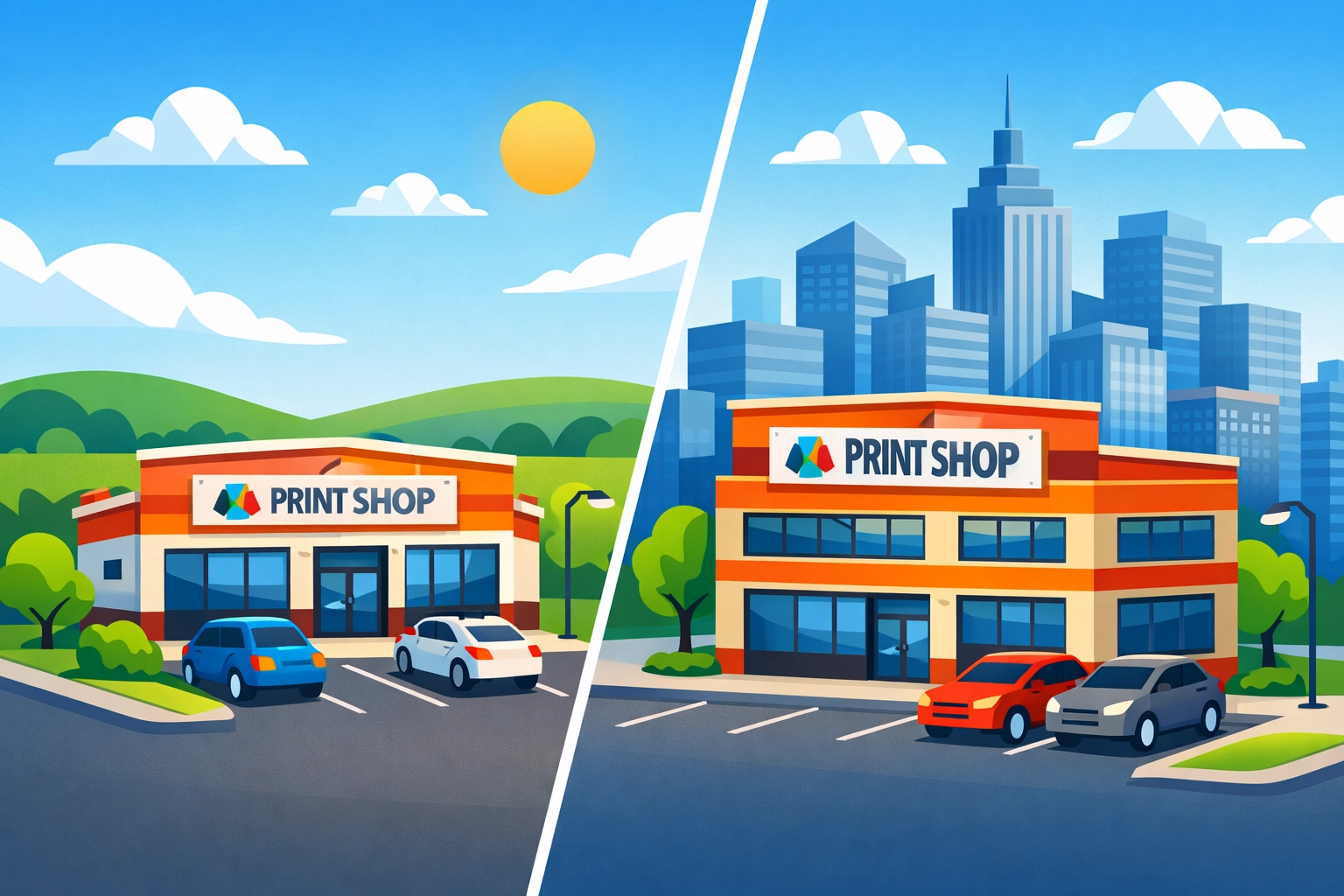
Location selection influences both startup costs and ongoing profitability. Suburban commercial space averaging 500 square feet costs $5,000 to $15,000 annually, while comparable space in high-demand urban markets exceeds $25,000 per year (Commercial Real Estate Association, 2026). These differences compound over time, significantly affecting your breakeven timeline.
However, location also determines customer accessibility and labor availability. Suburban locations may reduce rent while increasing customer acquisition costs. Urban locations command premium rent but provide proximity to design agencies, corporate clients, and quick-turn opportunities. Analyze your target customer's location before prioritizing rent savings.
Technology Infrastructure Requires Ongoing Investment
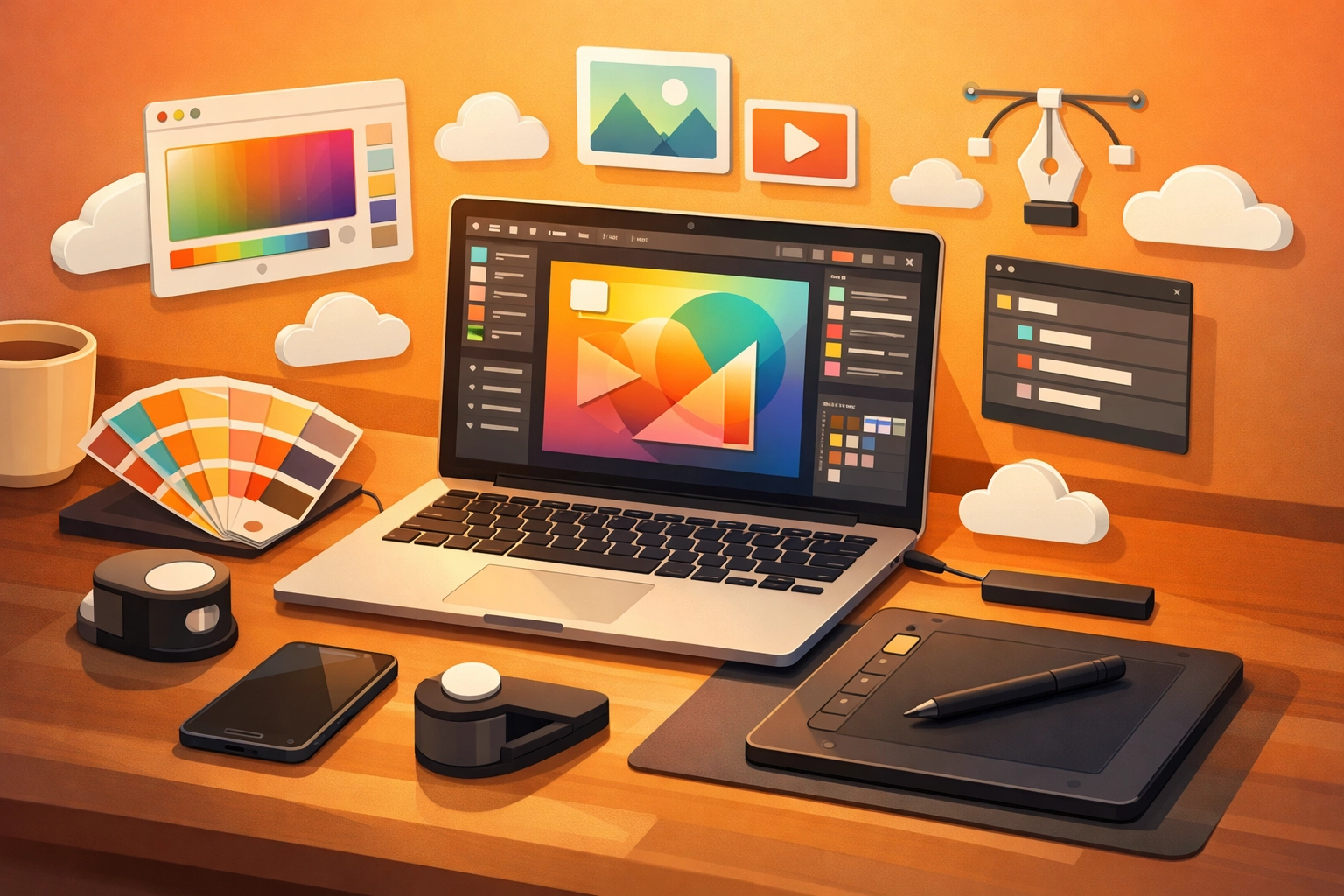
Design software and digital tools represent essential but often underestimated expenses. Professional design applications including Adobe Creative Cloud cost $9.99 to $54.99 monthly depending on subscription tiers. Specialized tools for print production workflow, color management, and file preparation add additional monthly costs.
Budget $30 to $100 monthly for software subscriptions. These tools directly impact production efficiency and output quality, making them investments rather than expenses. Cloud-based solutions offer scalability advantages, allowing you to adjust capabilities as your business grows.
Digital Presence Demands Strategic Allocation
Website development and e-commerce integration costs range from $500 for DIY platforms to $10,000 for custom development. Print-on-demand sellers using platforms like Shopify typically budget $39 to $200 monthly for hosting, domain, and platform fees (E-commerce Platform Analysis, 2026).
Your digital presence functions as both portfolio and acquisition channel. Investing in professional web development often generates superior ROI compared to budget alternatives, particularly for B2B print services where professional credibility drives purchase decisions.
Consumable Materials Impact Margin Performance
Paper, specialty substrates, finishing materials, and binding supplies require initial investments of $2,000 to $10,000. These consumable costs continue throughout operations, directly affecting gross margins. Establishing vendor relationships and negotiating volume pricing becomes critical as production scales.
Inventory management for supplies requires balancing cost savings from bulk purchases against cash flow constraints and storage costs. Many successful print shops develop just-in-time ordering systems that minimize inventory investment while maintaining production continuity.
Regulatory Compliance Protects Long-Term Viability
Business registration costs $50 to $150 as one-time expenses, varying by jurisdiction and entity structure. Business insurance and legal fees range from $500 to $3,000 annually (Small Business Administration, 2025). These expenses protect your investment without contributing to production capacity, making them easy to defer but risky to skip.
General liability insurance, professional liability coverage, and workers compensation insurance become increasingly important as your business scales. Budget these as non-negotiable operational costs rather than optional expenses.
ROI Calculation Requires Comprehensive Analysis
Equipment ROI depends on gross margins, production volume, utilization rates, and financing structure. A digital press producing 10,000 impressions monthly at $0.15 gross profit per impression generates $1,500 monthly gross profit, requiring 33 months to recover a $50,000 equipment investment before considering operating expenses.
This calculation excludes labor, rent, utilities, and overhead, which typically consume 40 to 60 percent of gross profit in print operations. Realistic ROI timelines for major equipment purchases extend 36 to 60 months for most print shops. Businesses achieving faster returns typically benefit from specialized niches, efficient operations, or established customer relationships that ensure high utilization rates.
Strategic Planning Drives Sustainable Growth
Successful print shop startups balance equipment capabilities with market demand, avoiding the temptation to overspend on capacity that exceeds near-term needs. Starting with focused service offerings and expanding as customer demand justifies additional investment creates more sustainable growth trajectories than attempting comprehensive service portfolios immediately.
The print industry in 2026 rewards operational efficiency, market specialization, and strategic capital allocation. Understanding the complete cost structure beyond equipment purchases allows entrepreneurs to build realistic financial models and make informed investment decisions that support long-term profitability.
Works Cited
Commercial Real Estate Association. (2026). Small Business Space Rental Trends 2026. CREA Industry Report.
E-commerce Platform Analysis. (2026). Digital Commerce Cost Structures for Small Business. E-commerce Research Institute.
Print Industries Market Information and Research Organization. (2026). Commercial Printing Equipment Investment Guide. PRIMIR Special Report.
PRINTING United Alliance. (2025). Print Business Startup Capital Requirements. PRINTING United Alliance Business Intelligence.
Small Business Administration. (2025). Operating Cost Benchmarks for Print and Graphic Services. SBA Office of Entrepreneurship Education.
Recent Comments