
The challenge of maintaining brand consistency across thousands of print touchpoints has become increasingly complex for modern design and print operations. AIGA's research into scalable brand identity systems reveals that successful implementation requires more than aesthetic coherence. It demands strategic frameworks that balance flexibility with control.
The Scale Problem in Print Production
Print shops and design studios managing multiple client brands face a persistent tension. Each project requires maintaining visual integrity while adapting to diverse formats, substrates, and production constraints. A brand identity that works flawlessly on coated stock may fail completely when transferred to uncoated materials or specialty printing processes.
AIGA's identity guidelines address this directly through what they term "flexibility within constraints." The principle acknowledges that rigid systems break under real-world production demands. Instead, effective brand architectures anticipate variability and provide clear decision-making frameworks for practitioners executing the work.
Visual Consistency as Operational Strategy
The data from AIGA's approach demonstrates that visual consistency operates as more than a design preference. It functions as an operational efficiency mechanism. When design systems establish unified communication standards across platforms, production teams spend less time interpreting ambiguous guidelines and more time executing quality work.
This efficiency compounds at scale. A print operation managing 50 active brand identities with weak guidelines faces exponentially higher error rates, revision cycles, and client dissatisfaction compared to one working with well-structured systems. The business case for robust brand architecture becomes clear when measured in production hours saved and material waste reduced.
Modular Systems for Print Applications
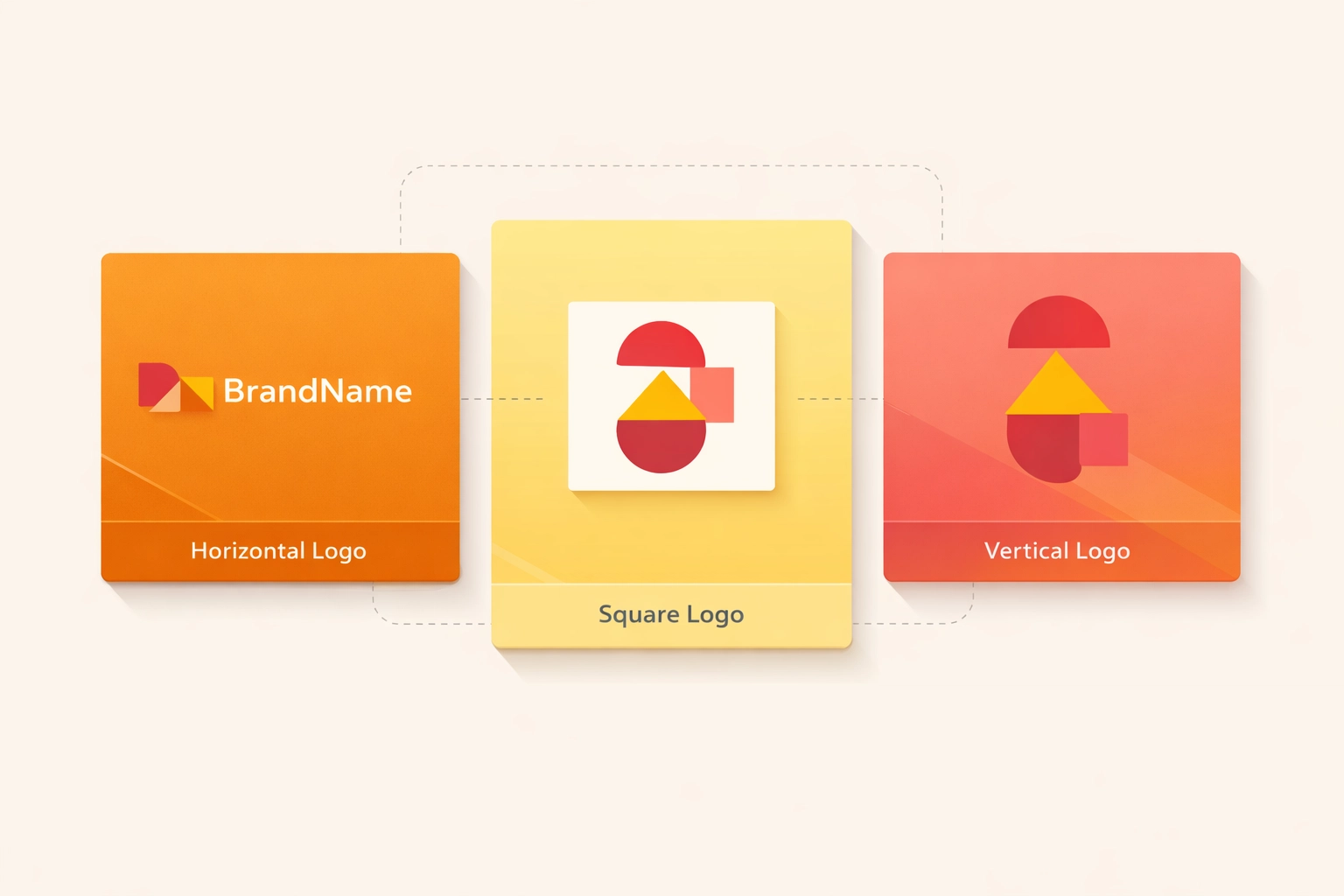
AIGA's three-variation approach to their logotype (horizontal, square, and vertical) provides a template for thinking about modularity in brand systems. The variations are not arbitrary aesthetic choices. They respond to spatial constraints inherent in different applications.
Print production particularly benefits from this modular thinking. Business cards require different compositional solutions than banner stands or vehicle wraps. A horizontal lockup that works perfectly on letterhead becomes cramped and illegible when forced into a square social media profile that also appears on promotional items. Systems designed with these spatial realities in mind reduce the need for custom adaptations that introduce inconsistency.

Production Constraints and Color Management
AIGA's specification for 65% black in non-color printing scenarios addresses a fundamental production reality that many brand guidelines ignore. Not every print run justifies full color. Budget constraints, substrate limitations, or project requirements often necessitate single-color printing.
Brand systems that only define full-color specifications leave production teams guessing at appropriate alternatives. This creates consistency problems across a client's print collateral. When different vendors make different decisions about grayscale conversion or single-color alternatives, the brand fractures visually.
Strategic brand architecture anticipates these constraints. It provides explicit guidance for color-limited scenarios, specialty processes like screen printing or foil stamping, and low-budget applications. This foresight prevents the quality degradation that occurs when production teams improvise solutions under deadline pressure.
Template Infrastructure and Quality Control
AIGA recognizes that consistency at scale requires more than a PDF style guide. It demands template infrastructure that embeds guidelines into production tools. When multiple designers, print vendors, and client teams implement a brand across applications, human interpretation introduces drift.
Template systems reduce this variability. A properly constructed template makes correct implementation easier than incorrect implementation. It guides users toward brand-compliant decisions through the structure of the tool itself rather than relying on their memory of a 60-page guideline document.
For print operations, this translates to production templates for common formats. Preflighted files with correct bleeds, color builds, and layout grids reduce prepress errors and expedite job processing. The upfront investment in template development pays dividends through reduced revision cycles and faster turnaround times.

Typography and Hierarchy at Various Scales
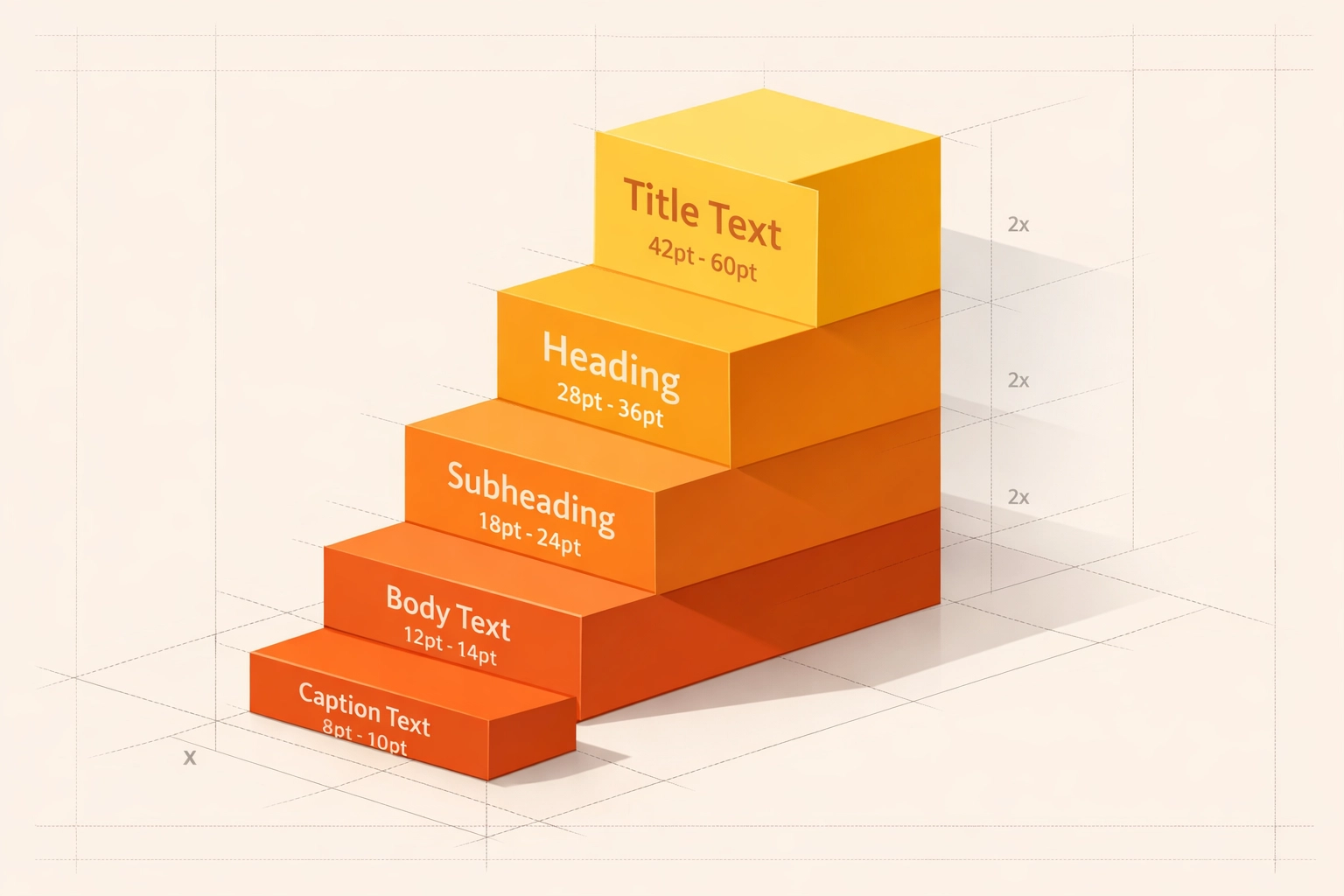
Type systems must perform across dramatic scale variations in print. A typeface that delivers excellent readability in body text at 10 points may lose character and impact when scaled to headline size on a trade show banner. Conversely, display faces that create strong visual presence at large sizes often fail in sustained reading contexts.
Sophisticated brand systems address this through tiered type hierarchies. They specify different typefaces or weights for different scale applications. They provide guidelines for minimum sizes, optimal line lengths, and spacing adjustments that maintain readability across formats.
This thinking extends beyond typeface selection to layout hierarchy. The visual relationships that structure information on a business card require recalibration on a poster. Effective brand guidelines provide principles for maintaining hierarchical clarity across scale rather than prescribing rigid layouts that cannot adapt.
Sustainability Considerations in Scalable Systems
Modern brand identity systems increasingly incorporate sustainability specifications as core components rather than afterthoughts. This includes guidance on material selection, ink formulations, and production processes that align with environmental objectives.
For print operations, these specifications create both challenges and opportunities. Sustainable material alternatives may require adjustments to color management or printing techniques. However, brands that proactively integrate these considerations into their identity systems position themselves favorably with environmentally conscious clients and consumers.
AIGA's research suggests that sustainability constraints, like production constraints, benefit from explicit guidelines rather than general aspirations. Specifying approved recycled stock grades, vegetable-based ink requirements, or preferred finishing processes gives production teams clear direction for sustainable implementation.
ROI Metrics for Identity System Investment
The business case for investing in comprehensive brand identity systems becomes measurable through several metrics relevant to print operations. Reduced revision rates directly impact profitability by minimizing unbillable rework time. Faster job processing improves throughput and capacity utilization.
Client retention also correlates with consistent brand execution. When a print operation reliably delivers brand-compliant work without extensive client oversight, it builds trust and repeat business. The alternative, requiring clients to review and correct brand inconsistencies on each project, creates friction that opens opportunities for competitors.
Material waste reduction provides another quantifiable benefit. Clear specifications reduce errors that result in reprints and substrate waste. For high-volume operations, even small percentage improvements in first-run success rates generate significant cost savings.
Implementation for Growing Operations
Print businesses scaling their operations face particular challenges with brand identity management. A workflow that functioned adequately at lower volumes breaks under increased complexity. Systematic approaches become essential rather than optional.
This transition requires investment in both infrastructure and training. Staff need education not just in design principles but in the strategic thinking behind scalable brand systems. They need to understand why certain specifications exist and how to make appropriate decisions when faced with scenarios the guidelines do not explicitly address.
Documentation systems must evolve beyond static PDFs to dynamic resources that can be updated as brands develop and production capabilities change. Version control becomes critical when multiple team members access and implement guidelines.
Works Cited
AIGA. "AIGA Brand Identity Guidelines." AIGA Design for Democracy. Retrieved from AIGA official documentation, 2024.
PRINTING United Alliance. "Best Practices in Brand Consistency for Print Production." PRINTING United Alliance Industry Resources, 2025.
Thompson, Rebecca. "Scalable Design Systems: Strategic Implementation in Production Environments." Journal of Graphic Design Management, vol. 12, no. 3, 2025, pp. 45-62.
Recent Comments