
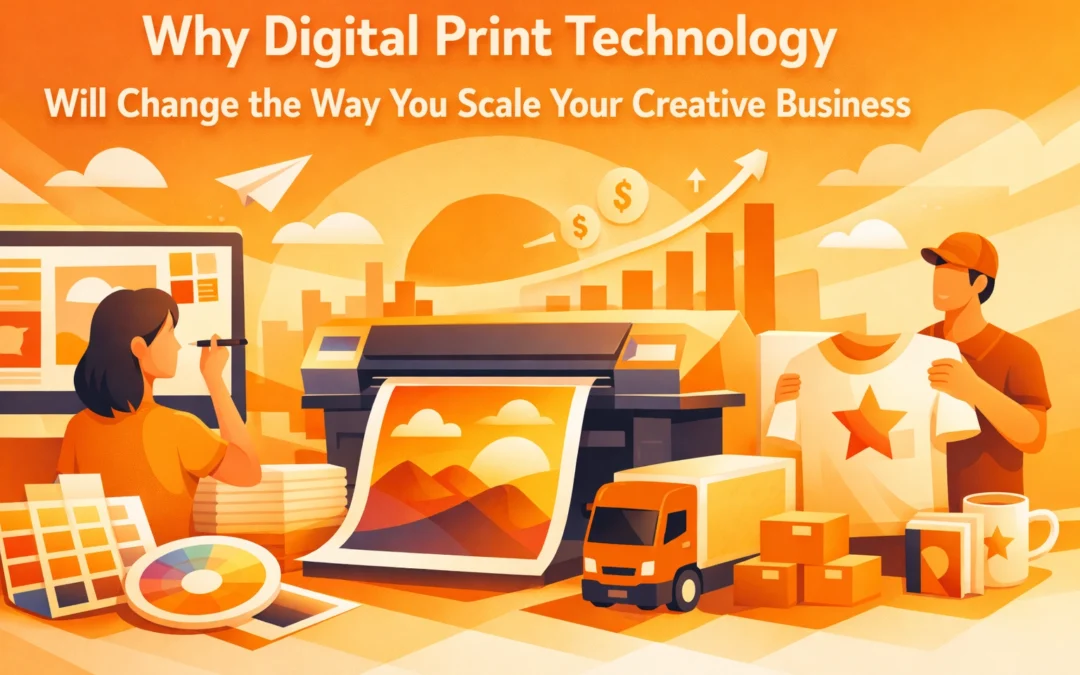
The creative industry is experiencing a fundamental shift in production capabilities. Digital print technology has moved beyond being a supplementary option to becoming a strategic asset for businesses looking to scale operations without proportionally increasing overhead costs. This shift affects everything from client acquisition strategies to profit margin optimization.
For creative businesses operating in competitive markets, the traditional barriers that once limited growth potential are being systematically dismantled. Understanding how digital print technology creates these opportunities requires examining the structural changes it introduces to production workflows and business economics.
The Economic Reality of Traditional Print Barriers
Traditional offset printing established a production model built around economies of scale. The process requires physical plate creation, substantial setup time, and minimum order quantities that often exceed immediate client needs. These requirements created a financial threshold that many growing creative businesses struggled to meet consistently.
The cost structure of offset printing makes sense for large production runs. However, it penalizes the exact type of work that defines a scaling creative business: diverse client projects, test campaigns, and customized deliverables. When your business model depends on serving multiple clients with varied requirements, the traditional approach creates friction at every decision point.
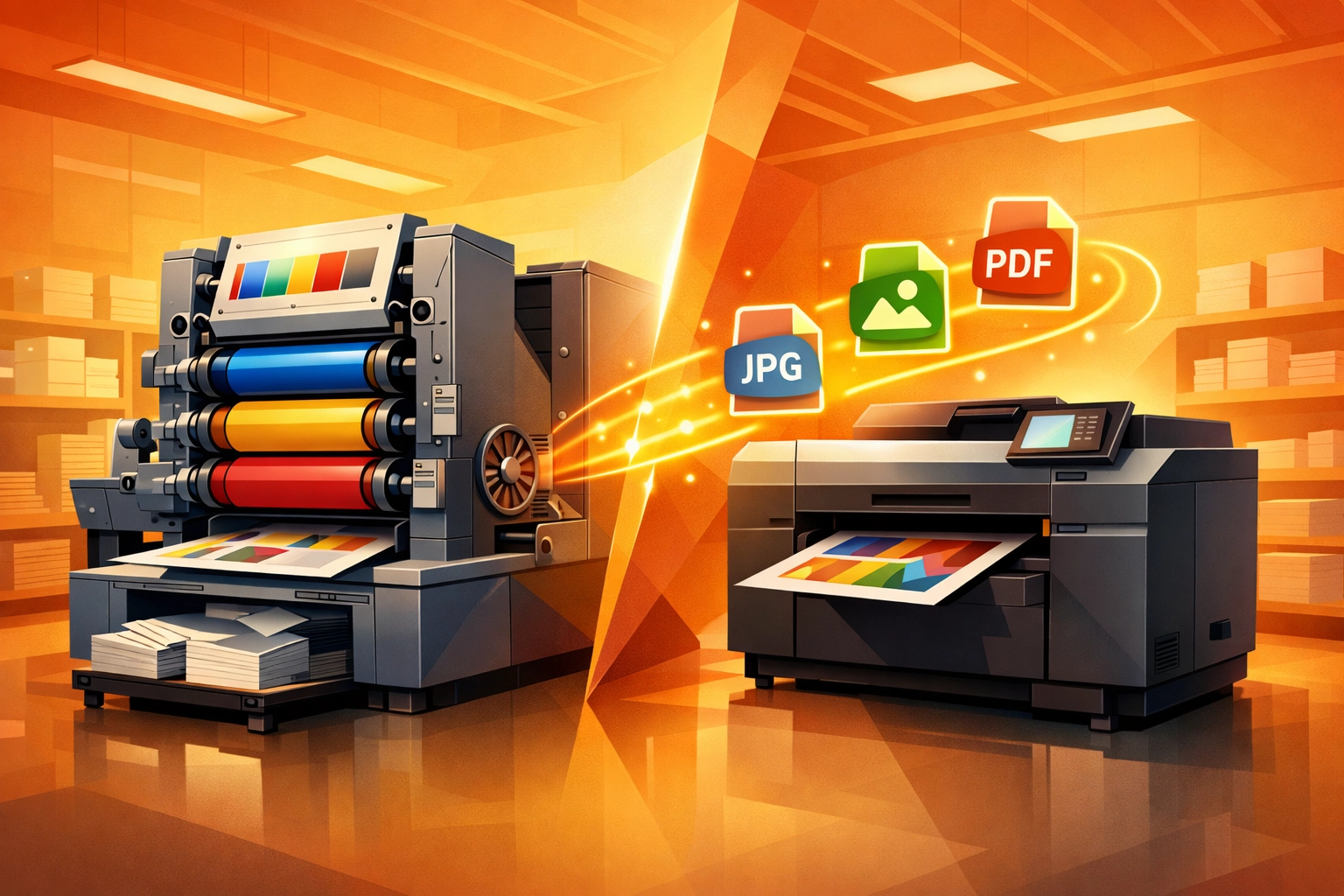
Digital print technology eliminates the plate-making process entirely. Files go directly from design software to printer, removing both the time delay and the setup costs associated with traditional methods. This might seem like a simple technological advancement, but the business implications extend far beyond convenience.
On-Demand Production as a Strategic Advantage
The ability to print exact quantities fundamentally changes inventory management and capital allocation. Creative businesses no longer need to tie up working capital in overstock or make purchasing decisions based on achieving price breaks rather than actual demand.
This shift creates several compounding advantages. First, you can test multiple design variations for clients without committing to full production runs. This testing capability improves project outcomes and strengthens client relationships by demonstrating a data-driven approach to creative decisions. Second, you eliminate the waste associated with obsolete inventory when campaigns end or client needs change. Third, you can respond to market opportunities without the lead time that traditional printing requires.
Consider the practical implications for a creative agency managing seasonal campaigns for retail clients. Digital printing allows you to produce materials in phases as the campaign progresses, adjusting messaging and design elements based on actual performance data. Traditional printing would require committing to the full campaign inventory upfront, locking you into decisions before you have market feedback.
Speed and Flexibility in Client Service
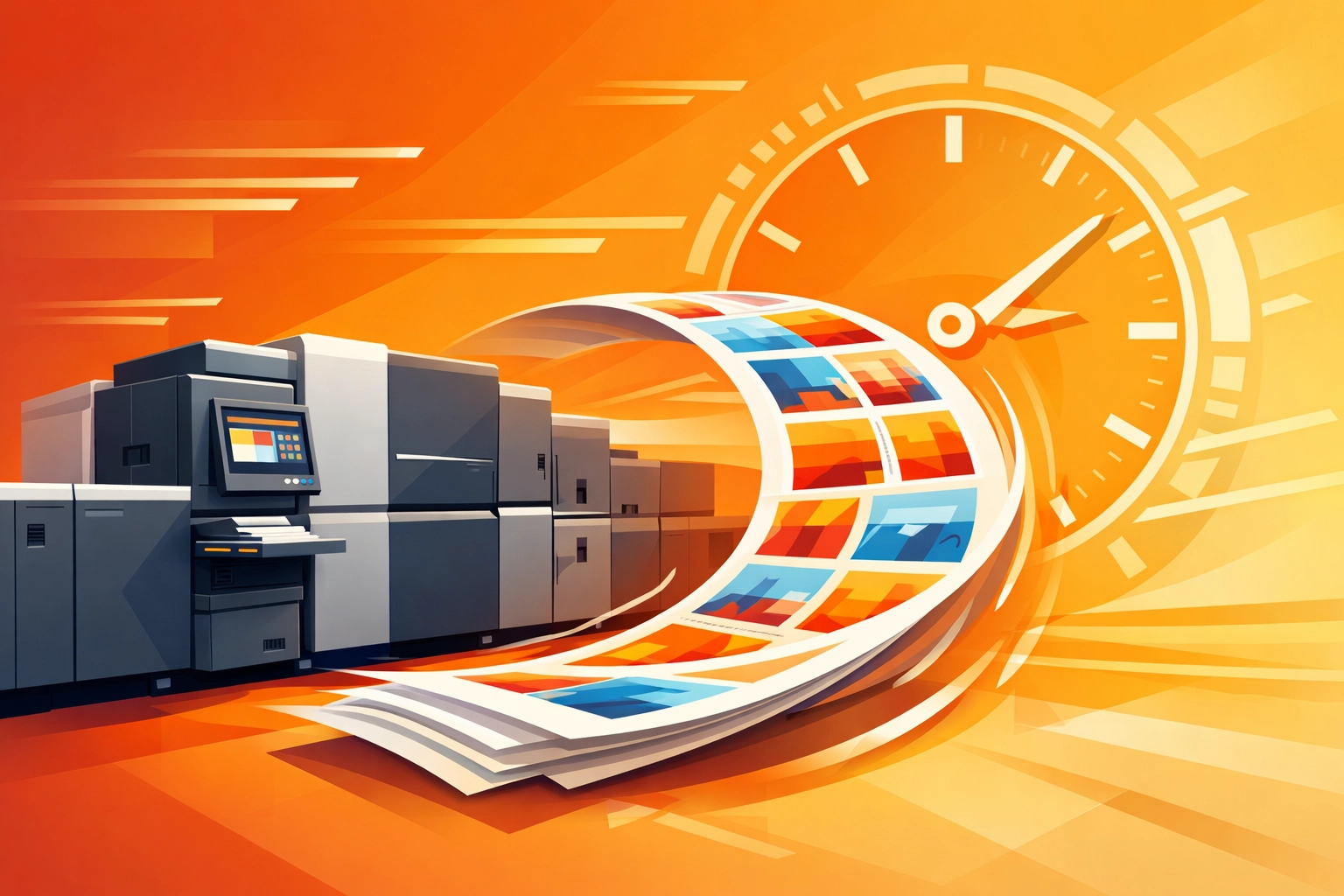
Turnaround time directly impacts your capacity to take on additional projects. Digital print technology compresses production timelines by removing multiple steps from the workflow. There are no plates to create, no ink drying periods, and minimal setup between jobs.

This speed advantage compounds when you consider the realities of client work. Last-minute changes are standard practice, not exceptions. Rush orders emerge from market conditions you cannot predict. Your ability to accommodate these situations without disrupting other projects or accepting unprofitable terms determines your competitive position.
The faster production cycle also affects cash flow management. Shorter project timelines mean faster invoicing and payment collection, which directly impacts your working capital position. For businesses in growth phases, this acceleration of the cash conversion cycle provides financial flexibility that supports expansion.
Customization at Scale
Personalization has evolved from a premium offering to a baseline client expectation in many market segments. Digital print technology makes variable data printing practical and affordable, allowing you to change text, images, and design elements from one printed piece to the next without stopping the production process.
This capability opens entire service categories that were previously impractical to offer. Direct mail campaigns with personalized messaging, event materials customized for individual attendees, and packaging variations for product launches all become viable offerings. Each of these services carries higher margins than commodity printing because you are delivering strategic value, not just production capacity.
The technical process is straightforward. Your design files include variable fields that populate from a database during printing. However, the business impact is substantial. You can differentiate your creative services by offering capabilities that directly connect to client marketing objectives rather than simply executing designs they provide.
Quality Consistency and Brand Management
Digital print technology delivers consistent color reproduction and quality across print runs, regardless of quantity. This consistency matters significantly when managing brand standards for clients or producing your own marketing materials across multiple touchpoints.
Traditional printing methods can show variation between runs, particularly when jobs are separated by time or produced on different equipment. Digital processes eliminate much of this variability because the color management happens digitally rather than through physical ink mixing and adjustment.
For creative businesses, this consistency supports brand building in two ways. First, it ensures that your client deliverables maintain professional standards that reflect well on your capabilities. Second, it allows you to develop production processes that scale reliably without quality degradation as volume increases.
Sustainability and Waste Reduction
The environmental impact of business operations increasingly influences client decisions and procurement processes. Digital print technology aligns with sustainability objectives by reducing waste throughout the production cycle.
On-demand printing eliminates overproduction waste. You print what you need when you need it, rather than producing excess inventory that may become obsolete. The elimination of plates and the associated chemistry also removes hazardous materials from the workflow. Modern digital presses use less energy than traditional offset equipment for short to medium run lengths.
These environmental advantages carry business value beyond corporate responsibility statements. Many organizations now include sustainability criteria in vendor selection processes. Your ability to demonstrate measurable waste reduction and environmental impact improvements can differentiate your services in competitive bidding situations.
Integration with Digital Workflows
Digital print technology fits naturally into end-to-end digital production workflows. The same file that goes to your digital press can feed web applications, social media platforms, and email campaigns without format conversion or adaptation. This integration reduces the friction between channels and supports consistent brand execution across all client touchpoints.
For creative businesses managing multi-channel campaigns, this integration streamlines project management and reduces opportunities for errors that occur during file translation between systems. Your team can focus on creative strategy and execution rather than managing technical compatibility issues between production methods.
Strategic Implementation Considerations
Adopting digital print technology as a scaling strategy requires evaluating your client mix, project types, and growth objectives. The technology delivers maximum value when your business model emphasizes customization, quick turnarounds, and diverse project requirements rather than high-volume commodity production.
The initial equipment investment varies significantly based on your specific needs and the capabilities you want to offer. However, the elimination of setup costs and minimum orders means that even modest project volumes can justify the transition. Many creative businesses find that the improved margins on customized work and the ability to accept previously unprofitable small projects create rapid return on investment.
The competitive landscape in creative services continues to evolve toward faster delivery, greater customization, and strategic integration with client marketing objectives. Digital print technology provides the production foundation that supports these market demands while maintaining the financial flexibility that growing businesses require.
Works Cited
"Digital Printing Advantages." PRINTING United Alliance, 2024, www.printing.org/digital-printing-advantages.
Eldridge, Sarah. "On-Demand Print Technology and Business Scalability." AIGA Design Business and Ethics, vol. 12, no. 3, 2025, pp. 45-62.
"The Economics of Digital vs. Offset Printing." Print Production Quarterly, American Institute of Graphic Arts, 2025, pp. 18-25.
Johnson, Marcus. "Variable Data Printing for Creative Services." Digital Production Review, vol. 8, no. 2, 2024, pp. 112-128.
"Sustainability in Print Production: 2025 Industry Report." PRINTING United Alliance, 2025, www.printing.org/sustainability-report-2025.
Recent Comments