
The financial landscape for launching a print shop in 2026 reflects a broader shift in how print businesses operate. Understanding the true cost of entry requires looking beyond simple equipment lists to consider business models, operational infrastructure, and strategic positioning. The range extends from under $500 for digital-first operations to over $450,000 for comprehensive service platforms.
1. Equipment Investment Drives Traditional Shop Economics
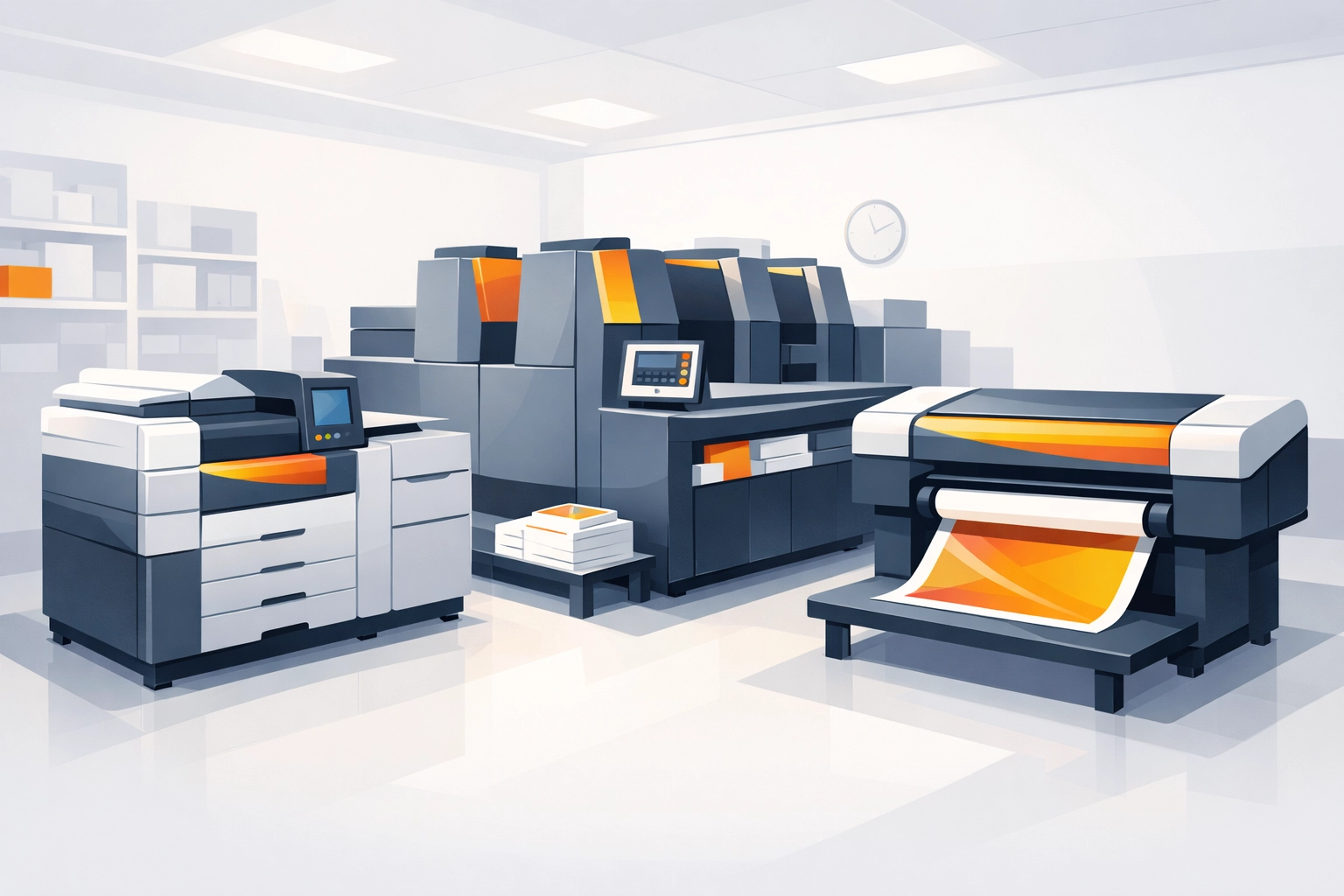
Physical printing equipment represents the single largest capital expenditure for brick-and-mortar operations. Digital printers suitable for commercial work range from $5,000 to $50,000 depending on capacity and quality specifications. Offset presses, which remain relevant for high-volume orders, command prices between $50,000 and $250,000. Large-format equipment for signage and banner production falls in the $10,000 to $100,000 range.
Screen printing operations offer a more accessible entry point. A functional setup including screens, frames, exposure units, and curing equipment can be assembled for $2,000 to $20,000. This lower threshold makes screen printing particularly attractive for specialized operations focusing on apparel and promotional products.
2. Print-on-Demand Eliminates Equipment Barriers
The rise of print-on-demand platforms has fundamentally altered the startup equation. New entrepreneurs can establish operations with $150 to $300 by leveraging existing marketplaces like Etsy or Redbubble. These platforms handle production, fulfillment, and payment processing. A more professional multi-channel approach costs $300 to $800 for design software, mockup tools, and initial marketing.
Serious POD entrepreneurs building proprietary brands typically invest around $1,000 or more to establish professional storefronts, develop cohesive product lines, and fund initial customer acquisition. This model shifts investment from physical infrastructure to brand development and market positioning.
3. Traditional Print Shop Ranges Reflect Scale and Services
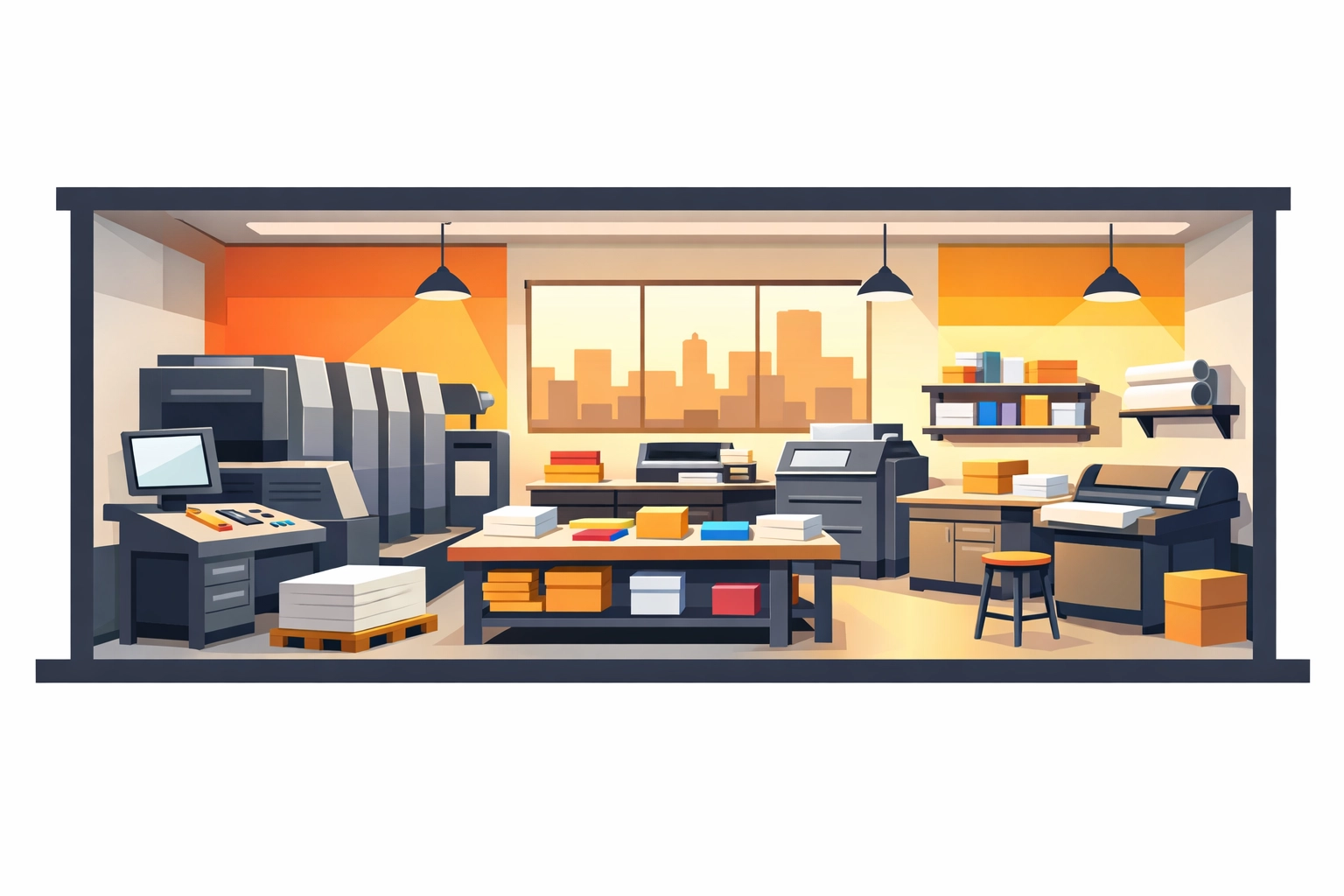
Conventional print shops with commercial space demonstrate significant cost variance based on service offerings and market positioning. Entry-level operations focused on basic printing services start at $8,100 to $32,200. This covers essential equipment, initial inventory, and minimal buildout costs.
Full-service operations providing design services, wide format printing, finishing capabilities, and commercial-grade production require $10,000 to $250,000. The upper range includes multiple printing technologies, professional finishing equipment, and comprehensive design workstations. Your competitive positioning and target market ultimately determine where you land within this spectrum.
4. Location Costs Extend Beyond Monthly Rent
Commercial space represents an ongoing financial commitment that extends well beyond simple rent calculations. Monthly lease costs typically range from $1,000 to $5,000 depending on square footage, location, and market conditions. Urban markets with higher visibility command premium rates but provide access to denser customer bases.
Initial occupancy costs including security deposits, first and last month's rent, and basic buildout run $4,000 to $12,000. Monthly operational overhead encompassing rent, utilities, insurance, and regulatory compliance averages $6,900 across established operations. These fixed costs create a baseline revenue requirement that influences pricing strategy and volume targets.

5. Material Inventory Requires Strategic Planning
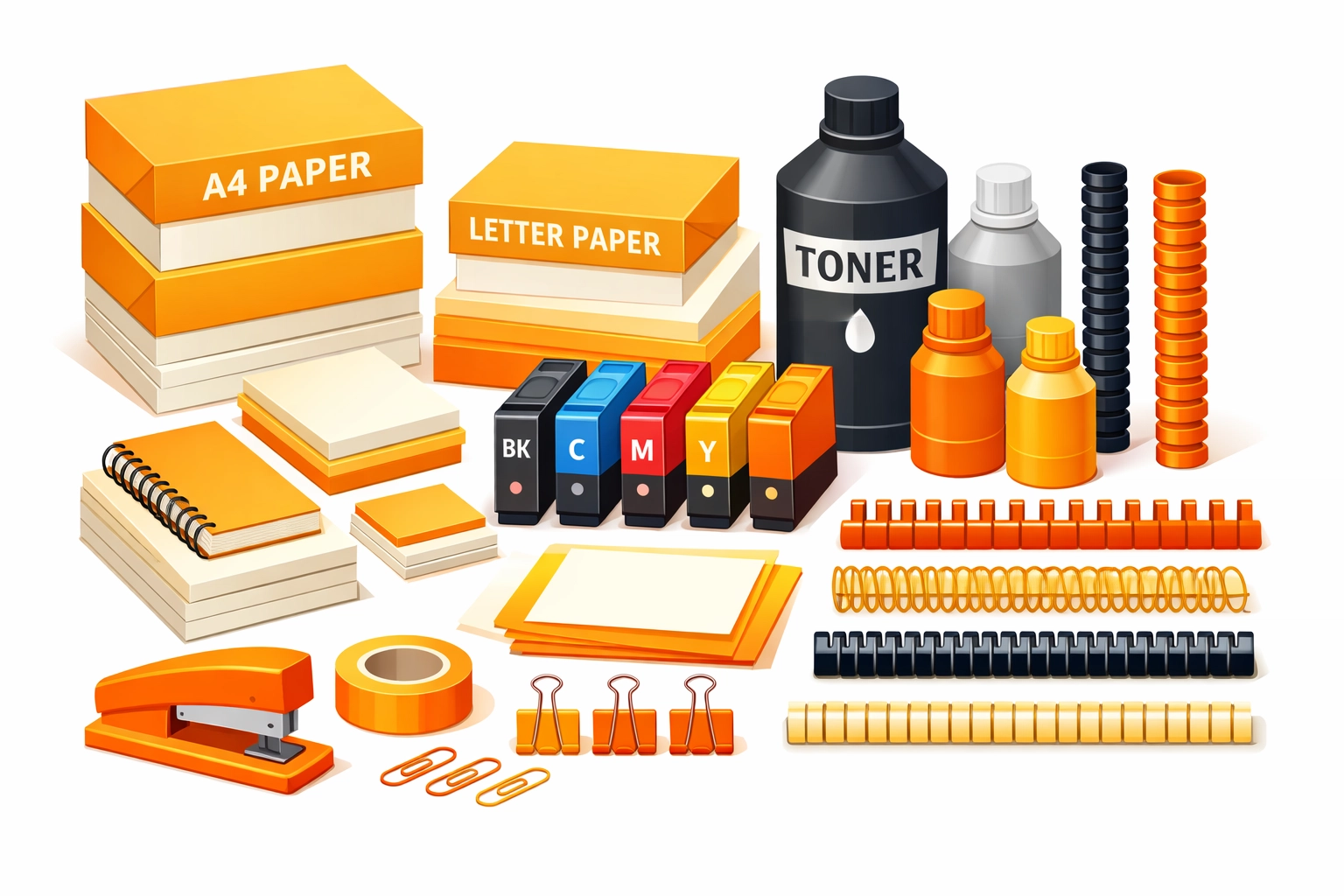
Initial inventory investment for paper stock, ink, toner, and binding supplies ranges from $2,000 to $10,000. The actual figure depends on your service breadth and decision to stock specialty materials. Shops offering diverse substrates, specialty finishes, and multiple paper weights require higher upfront investment.
Strategic inventory management balances customer expectations for quick turnaround against capital efficiency. Many successful operations start with core materials for their primary services and expand inventory as customer demand patterns emerge. This approach conserves working capital during the critical early months.
6. Staffing Transitions From Variable to Fixed Cost
Home-based and owner-operated businesses initially avoid staffing costs, allowing all revenue to cover equipment investment and material costs. Growth creates pressure to add production staff, customer service representatives, and potentially design professionals.
Full-service operations with marketplace platforms allocate approximately $295,000 for six months of core team compensation before launching revenue-generating operations. This breaks down to roughly $49,167 monthly across production, technology, customer service, and management roles. Understanding when staffing transitions from optional to essential helps in financial planning.
7. Digital Platform Development Represents Modern Infrastructure
Print businesses extending into marketplace or digital platform models face technology development costs that rival traditional equipment investment. Platform development typically requires $150,000 to $190,000 for custom functionality, user interfaces, order management systems, and integration with production workflows.
Server infrastructure, security protocols, and payment processing systems add another $40,000 to initial technology investment. These digital assets replace some physical infrastructure costs but create ongoing maintenance and upgrade requirements. The decision to build, buy, or leverage existing platforms significantly impacts both startup costs and operational flexibility.
8. Profitability Timelines Depend on Model Selection
Time to profitability varies dramatically across business models. Print-on-demand operations can achieve positive cash flow within months due to minimal overhead and pay-per-order production models. Owner-operated shops with controlled fixed costs typically reach profitability within six to twelve months.
Full-service operations and marketplace platforms require longer runways. Comprehensive platforms project break-even within nine months but require minimum cash reserves of $459,000 to sustain operations through the development phase. Understanding your model's realistic timeline prevents premature capital depletion.
9. Marketing Investment Determines Market Penetration Speed
Customer acquisition costs often receive insufficient attention in startup budgeting. Print-on-demand operators typically allocate $100 to $300 for initial paid advertising to test messaging and identify profitable customer segments. Serious entrepreneurs building sustainable brands budget $500 or more monthly for ongoing marketing.
Marketplace platforms face dual acquisition challenges. Industry benchmarks suggest allocating $300,000 annually for comprehensive customer acquisition, split between $100,000 for supplier recruitment and $200,000 for buyer acquisition. These figures reflect the reality that market penetration requires sustained investment beyond launch.
10. Business Model Selection Drives Actual Investment Requirements
The fundamental choice between business models determines your actual capital requirements more than any other single factor. Bootstrapping through print-on-demand with organic social media marketing requires under $500 total investment. This approach trades capital intensity for time investment and slower growth.
Establishing a full-service commercial print shop with employees, multiple printing technologies, and commercial space typically requires $50,000 to $250,000. This model offers higher revenue potential per transaction and greater control over quality and customer relationships but demands substantial upfront commitment.
Your decision should align with available capital, risk tolerance, industry experience, and growth objectives. The print industry in 2026 accommodates diverse entry strategies, each with distinct financial profiles and competitive dynamics.
Works Cited
PRINTING United Alliance. "Equipment and Technology Investment Guide for Print Shops." PRINTING United Alliance Industry Reports, 2025.
American Institute of Graphic Arts (AIGA). "Business Models in Contemporary Print Services." AIGA Design Business Insights, 2025.
Small Business Administration. "Startup Cost Analysis for Print Service Providers." SBA Industry Research Database, 2025.
Print Industries Market Information and Research Organization. "Financial Benchmarks for Commercial Printing Operations." PRIMIR Quarterly Reports, 2025.
Recent Comments