
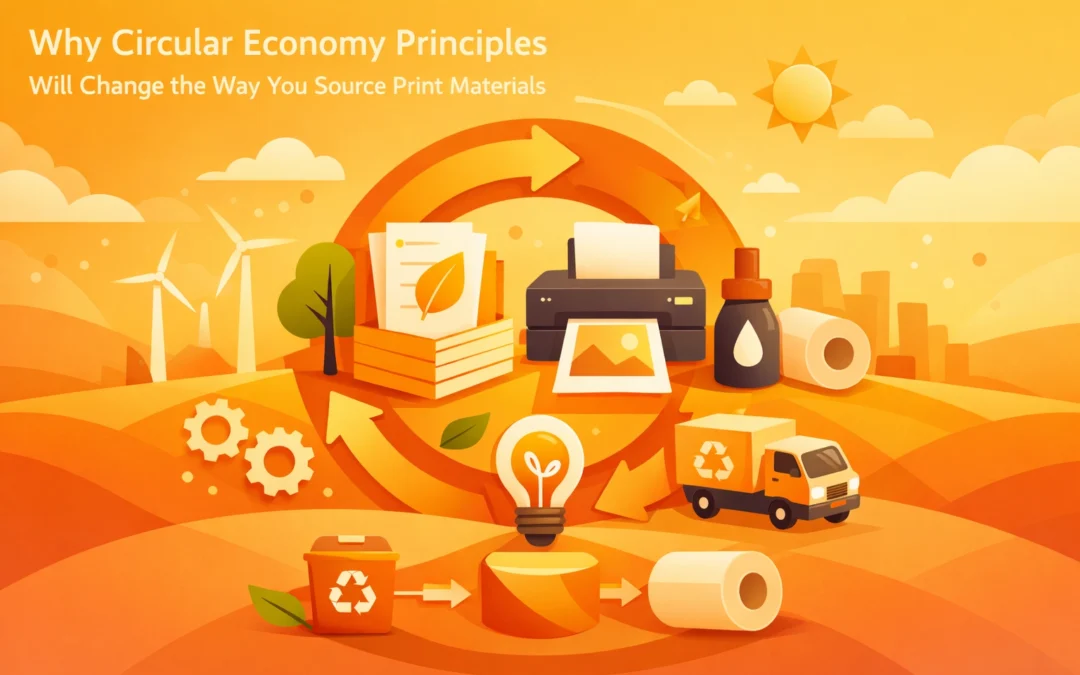
The traditional linear economic model of take, make, and waste is rapidly becoming obsolete within the graphic design and print sectors. For decades, the industry operated on a trajectory that prioritized immediate production efficiency over long-term resource viability. However, as we move through 2026, the transition toward a circular economy has shifted from a corporate social responsibility checkbox to a fundamental requirement for business continuity. Circularity in print sourcing involves a systemic approach to material selection, production processes, and end-of-life management that keeps resources in use for as long as possible.
Understanding this shift is essential for any organization that relies on physical collateral for branding and communication. The shift toward circularity is driven by a combination of tightening regulations, volatile material costs, and a significant evolution in consumer expectations. Companies that fail to adapt their sourcing strategies risk not only environmental obsolescence but also financial and legal repercussions.
The Structural Shift from Linear to Circular
In a linear system, materials are extracted, processed into print products, used briefly, and then discarded in a landfill. This process creates a massive amount of waste and requires a constant influx of virgin resources. Conversely, the circular economy is restorative and regenerative by design. It focuses on three primary principles: eliminating waste and pollution, circulating products and materials at their highest value, and regenerating natural systems.
For the print industry, this means reevaluating every stage of the supply chain. Sourcing is no longer just about finding the lowest price per unit. It is about understanding the origin of the fiber, the chemical composition of the inks, and the likelihood that the finished product can be successfully reintegrated into the production cycle after its initial use. When Creative Design Hub (84G) consults with clients on graphic design projects, the conversation now begins with the end of the product life cycle.

Regulatory Pressure and Extended Producer Responsibility
One of the most significant catalysts for change is the implementation of Extended Producer Responsibility (EPR) laws. These regulations hold manufacturers and brand owners accountable for the entire life cycle of their products, including collection and recycling. In many jurisdictions, this translates to fees based on the recyclability and environmental impact of the packaging and print materials produced.
As these laws become more stringent, the cost of using non-recyclable materials will skyrocket. Sourcing teams must now prioritize materials that are compatible with existing local recycling infrastructures. This shift necessitates a deeper partnership between designers, printers, and waste management entities. If a high-end brochure uses a specific plastic laminate that renders the paper unrecyclable, the brand owner may face higher regulatory costs that negate any initial savings from cheaper material choices.
Strategic Material Selection Beyond Virgin Fiber
The core of circular sourcing lies in the transition toward non-virgin materials. Utilizing post-consumer waste (PCW) is the current gold standard for sustainable print. However, the strategy is evolving to include more innovative substrates. We are seeing a rise in the use of agricultural waste fibers, such as straw, hemp, and sugarcane bagasse, which provide high-quality alternatives to traditional wood pulp.
Bioplastics and bio-based coatings are also replacing petroleum-derived components. These materials are designed to break down in industrial composting facilities or be easily separated during the paper pulping process. When sourcing these materials, it is vital to verify certifications from organizations like the Forest Stewardship Council (FSC) or the Programme for the Endorsement of Forest Certification (PEFC). These certifications ensure that even when virgin fiber is necessary, it is harvested in a way that promotes forest regeneration rather than depletion.

Designing for Disassembly and Recyclability
Graphic design plays a pivotal role in the circularity of a print project. Decisions made at the creative stage dictate whether a piece of collateral can be recycled or if it is destined for a landfill. For example, the choice of adhesives, inks, and finishes can significantly impact the de-inking process during paper recycling.
Circular design principles encourage the use of vegetable-based or soy-based inks over traditional petroleum-based options. These inks are not only better for the environment but also easier to remove from paper fibers during the recycling process. Furthermore, designers are increasingly avoiding heavy foil stamping or plastic-based coatings that contaminate recycling streams. Instead, they are utilizing aqueous coatings or digital embellishments that offer a similar aesthetic appeal without the environmental toll. At Creative Design Hub (84G), we emphasize that sustainable marketing materials must be functional throughout their entire life cycle.
Economic Resilience and Material Security
Adopting circular principles is a strategic move for business management and financial stability. The global supply chain has faced unprecedented disruptions over the last several years, leading to volatility in the price and availability of virgin paper and chemical additives. By creating closed-loop systems, companies can mitigate these risks.
Sourcing recycled materials often provides a more stable price point compared to the fluctuations of the virgin commodity market. Additionally, some companies are implementing take-back programs where they collect used materials from customers to be repurposed or recycled into new products. This creates a secure, internal supply of materials and fosters a deeper relationship with the customer base. Research indicates that companies adopting these sustainable procurement practices can see a reduction in material costs by up to 32 percent while simultaneously decreasing their carbon footprint.

The Role of Technology in Circular Sourcing
Digital transformation is a key enabler of the circular economy. Advanced tracking technologies, such as blockchain and digital watermarking, allow brands to monitor the journey of their print materials from the forest to the recycler. This transparency is crucial for verifying sustainability claims and ensuring that materials are being handled correctly at every stage.
Furthermore, on-demand digital printing technology reduces waste by allowing companies to print only what they need. The traditional model of printing thousands of items to achieve a lower unit cost often results in significant inventory obsolescence and waste. By leveraging high-speed digital presses, organizations can practice "just-in-time" sourcing, which aligns perfectly with circular principles by minimizing overproduction and resource consumption.
Implementation Strategies for Sourcing Professionals
Transitioning to a circular sourcing model requires a deliberate and phased approach. The following steps provide a roadmap for organizations looking to lead in this space:
First, conduct a thorough audit of current print materials. Identify which items are made from virgin resources and which ones are currently non-recyclable. This data serves as the baseline for improvement.
Second, engage with suppliers to understand their sustainability capabilities. Ask specific questions about their waste management practices, their use of renewable energy, and their ability to source certified recycled content. A professional partnership with a printer should be a collaborative effort toward circularity.
Third, rethink the design brief. Instruct creative teams to prioritize "mono-material" designs, which use a single type of material that is easy to recycle. Avoid complex multi-layered substrates that require specialized separation equipment.
Fourth, explore take-back and recovery options. Work with local recycling partners to ensure that the materials you put into the market have a clear path back into the production cycle. This might involve adding QR codes to print pieces that direct consumers to the nearest recycling location or provide instructions on how to return the item.
Conclusion
The move toward a circular economy is not a fleeting trend; it is a fundamental restructuring of how the world produces and consumes physical goods. For the print and graphic design industry, this represents both a challenge and a significant opportunity. By embracing circular economy principles, organizations can reduce their environmental impact, ensure compliance with emerging regulations, and build a more resilient and cost-effective supply chain.
As we continue to innovate at Creative Design Hub (84G), the focus remains on delivering high-quality visual solutions that respect the boundaries of our planet. Sourcing print materials with a circular mindset is the only way to ensure the long-term viability of the industry and the brands it serves.

Works Cited
AIGA. "Design for Sustainability: A Guide for Graphic Designers." AIGA Design Educators Community, 2024.
Ellen MacArthur Foundation. "The Circular Economy in Detail." Ellen MacArthur Foundation, 2023.
PRINTING United Alliance. "2025 State of the Industry Report: Sustainability and Regulatory Trends." PRINTING United Alliance, 2025.
United Nations Environment Programme. "Circular Economy: Global Outlook and Regulatory Shifts." UNEP Publications, 2024.
Recent Comments