
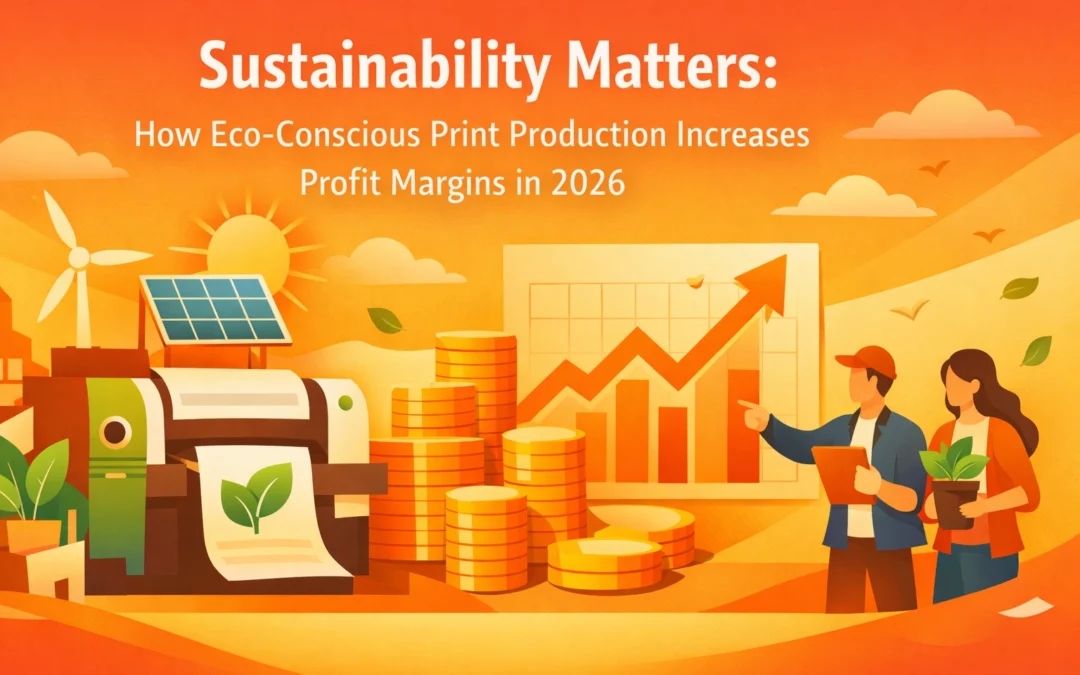
The business case for sustainable print production has evolved beyond corporate responsibility narratives. Printers implementing eco-conscious production methods are documenting measurable profit improvements across operational efficiency, pricing power, and market positioning in 2026. The financial data presents a clear argument: sustainability now functions as a profit center rather than a cost burden.
Technology-Driven Margin Improvements
Production inkjet systems represent the most significant technological shift affecting print profitability this year. Facilities that have transitioned from toner-based methods to inkjet production report an average 8% increase in profit margins. This improvement stems from multiple operational factors. Lower cost per page reduces direct production expenses. Faster throughput increases facility capacity without proportional equipment investment. Material waste decreases by approximately 9%, directly impacting bottom-line performance (PRINTING United Alliance, 2025).
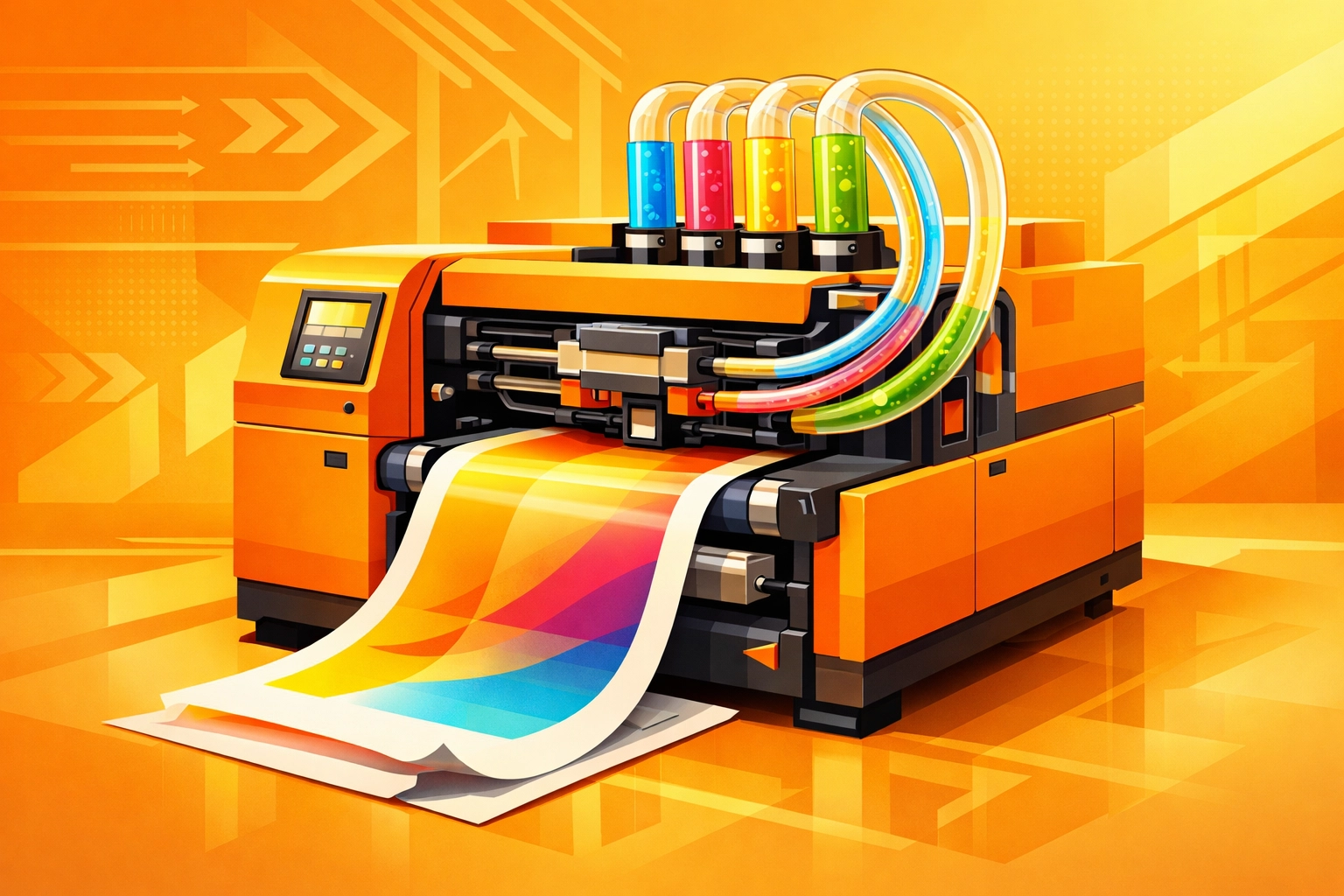
The operational mathematics behind these improvements reveals why inkjet adoption accelerates across commercial print segments. A mid-sized printer producing 500,000 impressions monthly can reduce material costs by $4,500 while simultaneously increasing production capacity by 15%. The capital investment in inkjet technology typically achieves payback within 18 to 24 months under current production scenarios.
Substrate flexibility provides an additional profitability lever. Modern inkjet systems accommodate wider material variety, allowing printers to bid on projects previously requiring specialized equipment or outsourcing. This capability expansion translates into increased revenue capture from existing client relationships without corresponding overhead growth.
Premium Pricing Power from Market Demand
Consumer behavior data reveals willingness to pay premium prices for sustainably produced materials. Industry research indicates 94.6% of respondents express willingness to pay more for eco-friendly textile options. This consumer sentiment creates direct pricing opportunities for printers who can credibly demonstrate sustainable production methods (Sustainable Apparel Coalition, 2025).
The sustainable printing market demonstrates growth substantially outpacing the broader printing industry. Market valuation increased from $2.07 billion in 2023 to current projections of $3.35 billion by 2030, representing a compound annual growth rate of 7.5%. This expansion velocity indicates structural market shift rather than temporary trend behavior.
Printers capturing this premium pricing opportunity typically implement third-party certification programs. Forest Stewardship Council (FSC) certification, Sustainable Green Printing Partnership (SGP) certification, and similar credentials provide verification that justifies higher price points. The certification investment costs range from $1,500 to $8,000 annually depending on facility size, but the pricing premium frequently exceeds 12% to 18% on certified products.

Corporate procurement departments increasingly mandate sustainability credentials in vendor selection processes. Major brands now require proof of environmental compliance in their supply chain qualification criteria. Printers without sustainability documentation face systematic exclusion from significant contract opportunities regardless of price competitiveness or production capability.
Revenue Diversification Through Sustainable Segments
Printers expanding into new market segments anchored by sustainability requirements report substantial revenue impacts. Companies that have successfully diversified into adjacent print categories document an average revenue increase of 16.7% with corresponding profitability improvements of 11.1%. These figures represent aggregate performance across facilities of varying sizes and geographic markets (Keypoint Intelligence, 2026).
The diversification strategy proving most effective involves leveraging existing sustainable infrastructure to access premium segments. A commercial printer operating water-based inkjet systems can enter the packaging market with minimal additional capital investment. The same sustainable production capability that serves corporate communications clients also qualifies the facility for food packaging contracts requiring specific environmental certifications.
Textile printing represents another high-growth diversification opportunity. Direct-to-garment printing technology using water-based inks aligns with apparel industry sustainability mandates while offering margins 20% to 30% higher than traditional commercial print work. The equipment investment ranges from $25,000 to $150,000 depending on production volume requirements, with typical breakeven occurring within 14 to 18 months.
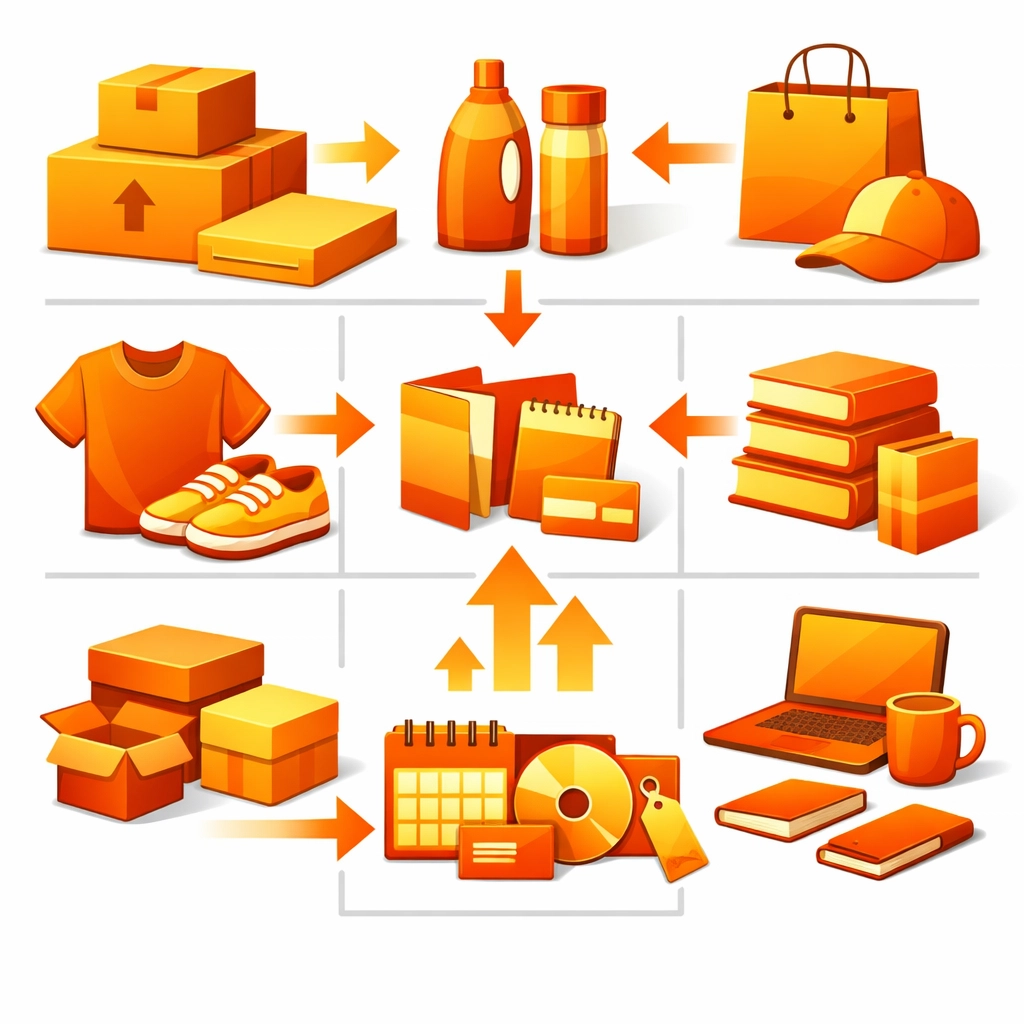
Market analysis identifies packaging as the largest growth opportunity for sustainable printers through 2028. Consumer packaged goods companies face increasing pressure to reduce packaging environmental impact while maintaining product protection and shelf appeal. Printers offering compostable, recyclable, or reduced-material packaging solutions access contracts previously dominated by specialized packaging manufacturers.
Regulatory Compliance as Competitive Advantage
Extended Producer Responsibility (EPR) legislation expanded across multiple states in 2026, creating compliance requirements affecting materials, chemicals, and recycling documentation. Printers who established sustainable practices before regulatory mandates gained significant competitive advantages. Early adopters avoid retrofit costs while competitors scramble to achieve compliance within compressed timeframes.
California, Colorado, Maine, and Oregon implemented comprehensive EPR programs affecting print materials and packaging. These regulations require detailed reporting on material sources, chemical usage, and end-of-life recyclability. Facilities lacking established documentation systems face implementation costs ranging from $15,000 to $75,000 depending on production complexity and reporting requirements.
The regulatory trend indicates continued expansion. Twelve additional states currently have EPR legislation under active consideration. Printers operating in multiple markets benefit from standardizing sustainable practices across all facilities rather than implementing region-specific compliance programs. This standardization approach reduces total compliance costs by approximately 30% compared to market-by-market adaptation.
Chemical usage documentation represents the most complex compliance requirement. Many traditional printing inks contain substances facing regulatory restriction or disclosure requirements. Printers using certified low-VOC or bio-based inks simplify compliance reporting while avoiding potential reformulation costs as regulations tighten.
Client Retention and Brand Loyalty
Sustainability credentials increasingly influence client retention rates in commercial printing relationships. B2B clients evaluate vendor sustainability performance as part of their own corporate environmental reporting. A printer's environmental practices directly affect client sustainability metrics, creating partnership dynamics beyond traditional price and quality considerations.

Brand reputation benefits extend beyond immediate client relationships. Printers promoting verified sustainable practices receive preferential consideration in request-for-proposal processes. Marketing agencies and corporate communications departments actively seek printing partners who enhance rather than compromise their sustainability positioning.
Social media and digital marketing amplify the brand differentiation value of sustainable practices. Printers sharing behind-the-scenes content about environmental initiatives generate engagement rates 40% higher than product-focused content. This organic reach reduces customer acquisition costs while strengthening relationships with existing accounts.
Implementation Strategies for Profit Maximization
Printers initiating sustainability programs should prioritize high-impact, quick-return investments. Energy-efficient lighting and equipment modifications typically achieve payback within six to twelve months. LED curing systems for UV printing reduce energy consumption by 70% while improving production speed and reducing heat-related substrate issues.
Waste reduction programs deliver immediate cost savings. Implementing color management systems reduces ink waste by 15% to 25%. Digital workflow automation eliminates plate waste in lithographic operations. Material recovery programs for paper trim and substrate remnants generate revenue through recycling channels while reducing disposal costs.
Supplier partnerships accelerate sustainability implementation. Ink manufacturers, substrate suppliers, and equipment vendors increasingly offer sustainability consulting as part of sales relationships. These partnerships provide expertise and verification documentation that supports certification applications and client communications.
Professional certification programs provide structure for sustainability initiatives while delivering market credibility. The Sustainable Green Printing Partnership offers comprehensive certification covering energy, materials, chemical usage, and waste management. Program participation costs vary by facility size but typically range from $2,000 to $10,000 annually including initial assessment and ongoing compliance verification.
Works Cited
Keypoint Intelligence. (2026). Print Market Outlook 2026: Diversification and Sustainability Trends. InfoTrends Research Group.
PRINTING United Alliance. (2025). State of the Industry Report: Production Technology and Environmental Impact. PRINTING United Alliance Research Division.
Sustainable Apparel Coalition. (2025). Consumer Attitudes Toward Sustainable Textiles and Printing. Higg Index Research Series.
Recent Comments