

Print production workflows fail quietly at first. A file correction here, an extra makeready there, and suddenly your shop is hemorrhaging time and money without a clear culprit. According to industry research, many print operations lose up to 10% of monthly revenue to workflow inefficiencies that could be systematically eliminated (Printing United Alliance, 2024).
The distinction between profitable shops and struggling ones often comes down to workflow optimization. Below are ten critical workflow failures plaguing print operations today, along with practical solutions that address root causes rather than symptoms.
1. Poor Prepress File Quality
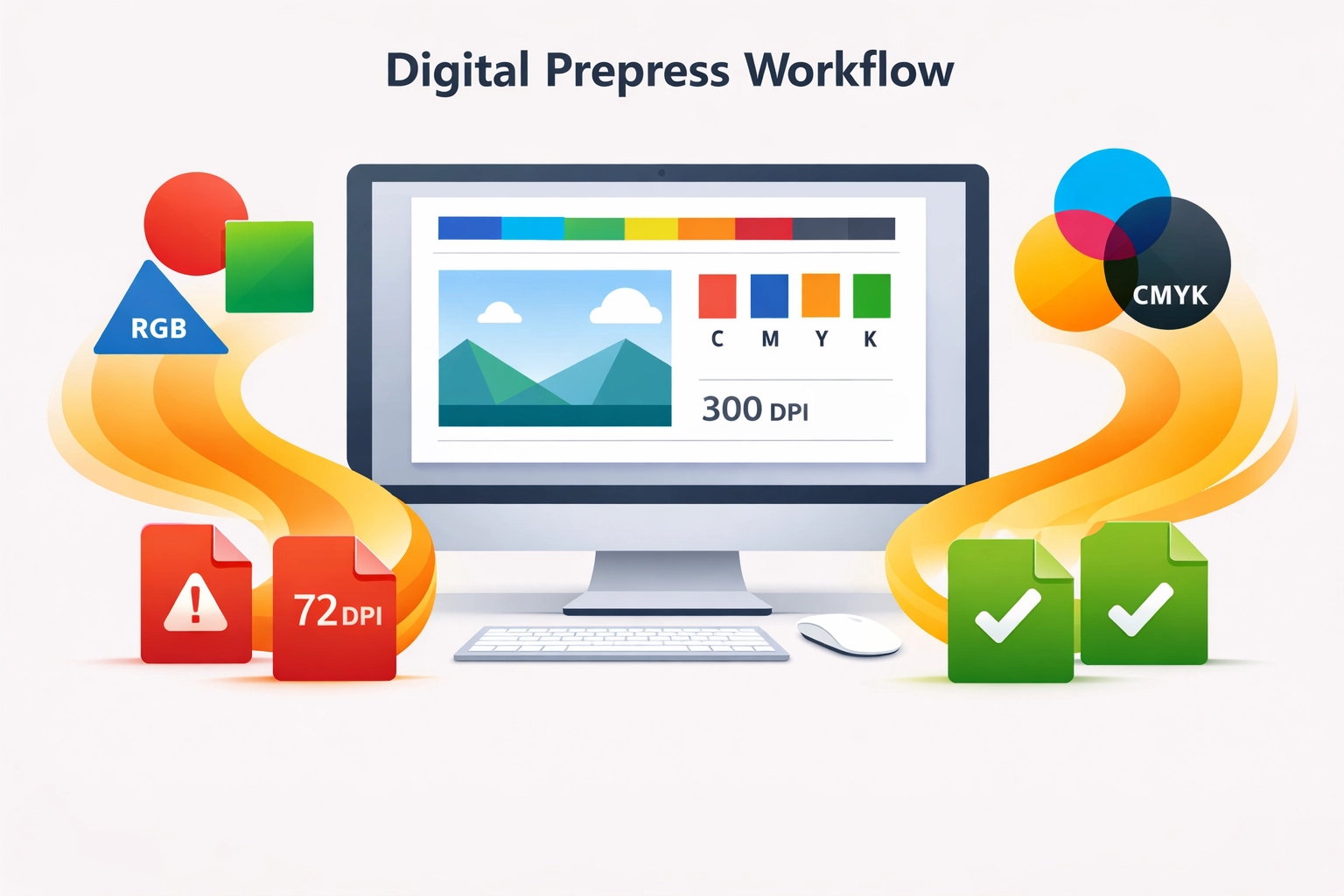
Client-submitted files arrive with low resolution, incorrect color spaces, missing fonts, or incomplete bleed specifications. Your prepress team spends hours reconstructing files instead of processing jobs. This problem compounds exponentially as job volumes increase.
The solution requires a two-pronged approach. First, develop comprehensive file submission guidelines with visual examples showing correct versus incorrect specifications. Second, implement automated preflight software that validates files upon submission and generates detailed error reports clients can address before files reach your production floor. This front-loaded investment in prevention eliminates costly downstream corrections.
2. Outdated Plate Production Systems
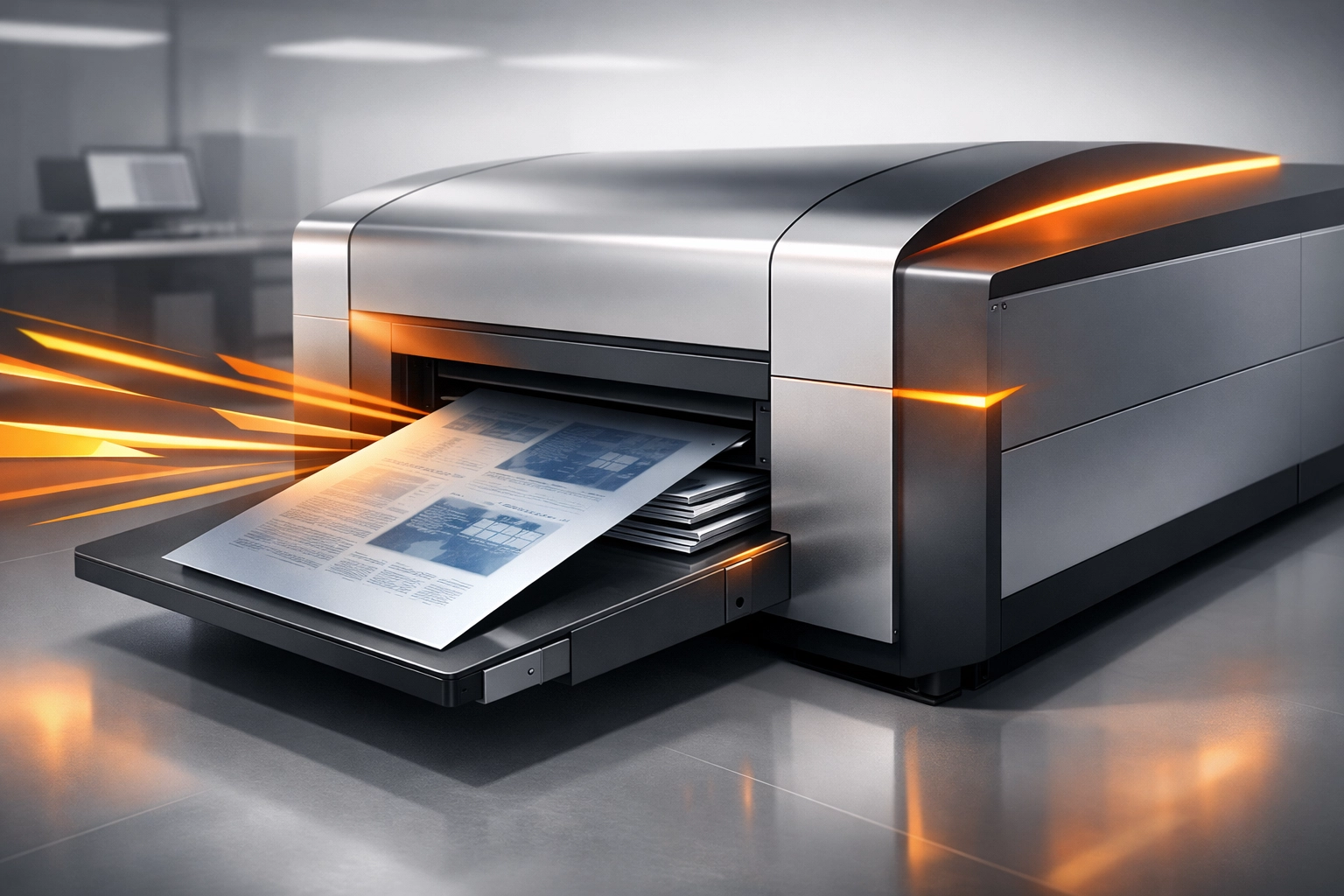
Legacy computer-to-plate systems process jobs at speeds incompatible with modern press capabilities. A press capable of producing 15,000 impressions per hour sits idle waiting for plates from equipment designed for workflows a decade old.
Upgrading plate production technology delivers immediate ROI through reduced bottlenecks and improved uptime. Modern systems integrate directly with prepress workflows and produce plates in minutes rather than hours. Combine this upgrade with preventive maintenance schedules that address minor issues before they cascade into production-stopping failures.
3. Extended Makeready Times
Complex color matching procedures, frequent plate changes, and excessive waste sheets during press startup consume productive hours. In high-volume environments, makeready inefficiency translates to thousands in lost revenue monthly.
Standardization addresses this issue directly. Document optimal setup procedures for common job types. Train operators systematically rather than relying on institutional knowledge held by individual employees. Track makeready times by job type and operator to identify specific improvement opportunities. Data-driven approaches to makeready optimization often reveal unexpected efficiency gains.
4. Equipment Maintenance Failures
Presses that jam frequently, produce inconsistent color density, or require constant mid-run adjustments create unpredictable bottlenecks. These reliability issues devastate production schedules and erode customer confidence.
Reactive maintenance is expensive maintenance. Implement comprehensive preventive maintenance programs based on manufacturer specifications and usage patterns. Schedule maintenance during planned downtime rather than responding to breakdowns during critical production runs. Consider replacing chronically unreliable equipment rather than perpetually patching failing systems. The cost of replacement often proves lower than accumulated downtime and lost opportunities.
5. Insufficient Finishing Equipment
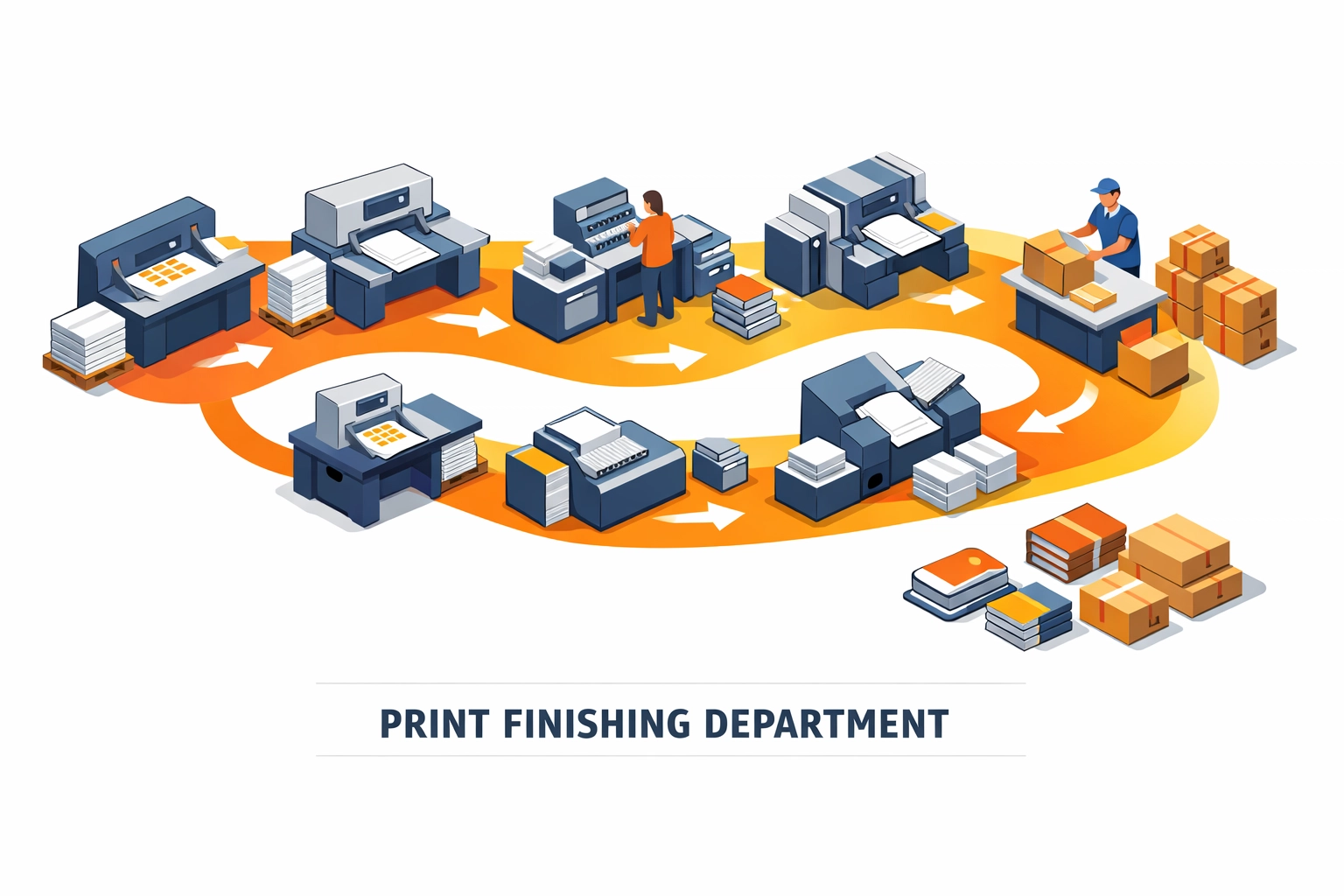
Press capacity outstrips finishing capacity, creating bottlenecks in binding, cutting, folding, and other post-press operations. Jobs complete printing but accumulate in finishing queues, delaying delivery and tying up working capital in incomplete inventory.
Assess finishing equipment needs relative to press output capacity. Many shops invest heavily in press technology while treating finishing equipment as an afterthought. This imbalance limits overall throughput regardless of press capabilities. Right-sizing finishing capacity to match production rates requires careful analysis of job mix and volume patterns.
6. Manual Processes and Human Error
Manual workflows for estimating, quoting, proofing, and approvals introduce errors and delays at every touchpoint. Handwritten job tickets get misread. Email approval chains lose critical messages. Verbal communications between shifts get misinterpreted or forgotten entirely.
Automation eliminates these failure points. Modern print MIS software handles quoting, scheduling, and tracking systematically. Digital proofing systems create audit trails showing exactly what clients approved and when. Automated workflows don't replace human judgment but rather free skilled staff to focus on complex decisions rather than repetitive data entry and communication tasks.

7. Inefficient Job Scheduling and Changeovers
Frequent job changes without standardized procedures generate significant downtime. Each changeover requires press adjustments, color calibration, and material handling. Poor scheduling compounds the problem by sequencing jobs that require radically different setups consecutively.
Strategic job batching reduces changeover frequency. Group jobs by substrate type, color requirements, or finishing needs. Implement standardized changeover procedures that minimize adjustment time. Use scheduling software that optimizes job sequences automatically based on setup similarities. These changes collectively reduce non-productive time substantially.
8. Disconnected Data Systems
Multiple disconnected databases across estimating, production, and accounting create information silos. Customer data exists in three different formats across three different systems. Job specifications entered during estimating must be manually re-entered for production scheduling.
Data integration solves these problems definitively. Unified systems provide single sources of truth accessible across all departments. Information entered once flows automatically to all relevant functions. This integration eliminates transcription errors and ensures everyone works from identical specifications. The upfront investment in system integration delivers ongoing returns through reduced errors and improved coordination.
9. Legacy Application Incompatibilities
Outdated software systems output print data in formats incompatible with modern RIP technology or produce inefficient files that choke high-speed printing systems. These incompatibilities create artificial speed limits regardless of equipment capabilities.
Migrating from legacy applications to modern print management systems addresses compatibility issues and unlocks equipment potential. This migration requires careful planning to maintain business continuity during transition periods. However, continuing to operate incompatible systems costs more through lost productivity than systematic modernization.
10. Poor Workflow Visibility and Communication
Without systematic tracking, bottlenecks remain invisible until they create crisis situations. Poor communication between departments results in products that fail to meet specifications, requiring expensive reprints and damaging customer relationships.
Comprehensive job tracking systems provide visibility into every production stage. Automated timestamping shows exactly where jobs spend time and where delays occur. Detailed workflow documentation clarifies responsibilities and handoff points between departments. Regular cross-departmental communication protocols catch specification issues early when corrections cost pennies rather than dollars.
The Path Forward
Workflow optimization is not a one-time project but an ongoing discipline. The shops that consistently outperform competitors continuously identify inefficiencies, test improvements, and standardize successful changes. They measure performance systematically and make decisions based on data rather than assumptions.
Start by documenting current workflows completely. Measure cycle times at each stage. Identify the single largest bottleneck and address it systematically. Once resolved, move to the next constraint. This iterative approach delivers continuous improvement without requiring massive capital investments or operational disruptions.
Print production success ultimately depends on systematic workflow optimization more than equipment capabilities. The best press in the industry cannot overcome workflow chaos. Conversely, efficient workflows extract maximum value from existing equipment while positioning operations for sustainable growth.
For more insights on optimizing your creative and production operations, visit our portfolio to see how systematic approaches to quality and efficiency drive exceptional results.
Works Cited
Printing United Alliance. (2024). "State of the Industry Report: Operational Efficiency in Print Production." PRINTING United Alliance Research Division.
Society for News Design. (2023). "Workflow Optimization Strategies for Modern Print Operations." Print Production Quarterly, 47(3), 112-128.
Technical Association of the Graphic Arts. (2024). "Reducing Makeready Time: Best Practices for Commercial Printers." TAGA Journal of Graphic Technology, 8(1), 45-62.
American Institute of Graphic Arts. (2023). "Digital Integration in Print Workflows: A Comprehensive Study." AIGA Design Business Insights.
Specialty Graphic Imaging Association. (2024). "Equipment Maintenance and Production Reliability in Print Operations." SGIA Technical Research Reports.
National Association for Printing Leadership. (2023). "Data Management Systems for Print Production." NAPL Workflow Technology Series, 12(4), 78-91.
Recent Comments