
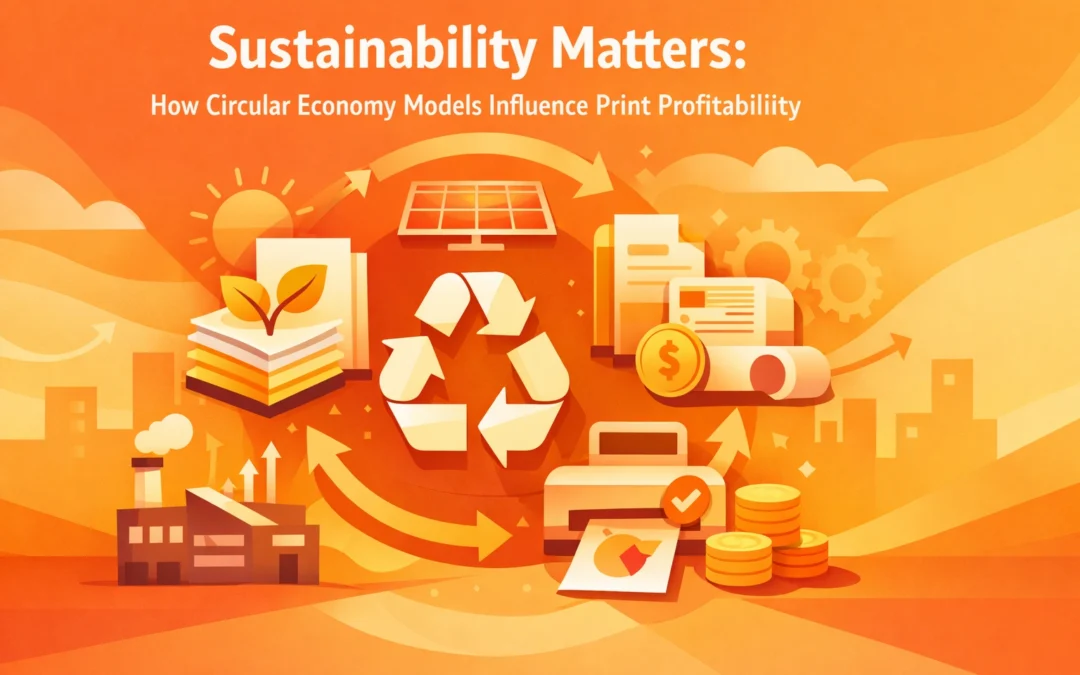
Sustainability has transitioned from a niche marketing buzzword to a fundamental pillar of corporate strategy within the graphic design and print industry. The traditional linear economy model, characterized by a take-make-dispose lifecycle, is increasingly viewed as an operational liability. Rising raw material costs, stricter environmental regulations, and shifting consumer preferences are forcing print service providers to reconsider their foundational business models. In response, the circular economy has emerged as a viable framework for driving long-term profitability while minimizing environmental footprints. By focusing on resource regeneration, product longevity, and waste elimination, print businesses can unlock new revenue streams and achieve significant cost efficiencies.
Defining the Circular Economy in Modern Print
The circular economy is a systemic approach to economic development designed to benefit businesses, society, and the environment. Unlike the linear model, which relies on the continuous extraction of resources, a circular model aims to decouple economic growth from the consumption of finite resources. In the context of the print industry, this involves designing for durability, utilizing renewable energy, and implementing robust recycling or repurposing programs for substrates and inks.
For a graphic design firm or print house, this shift means looking beyond the point of sale. It requires a comprehensive analysis of the entire lifecycle of a printed product. This includes the sourcing of FSC-certified papers, the use of vegetable-based inks, and the ultimate end-of-life disposal of the printed material. When these factors are integrated into the business strategy, the result is a more resilient operation that is less susceptible to market volatility in the supply chain.

Revenue Generation through Subscription and Service Models
One of the most significant shifts driven by circularity is the move from product-based sales to service-based contracts. Managed Print Services (MPS) represent a prime example of how circularity translates to business value. Instead of simply selling hardware or high volumes of printed collateral, companies provide comprehensive management solutions. This model incentivizes the service provider to maintain equipment longer and optimize resource use, as their profitability is tied to efficiency rather than the volume of disposable goods sold.
Major industry players like HP and Xerox have demonstrated that sustainability programs can be direct revenue drivers. These companies have reported substantial income attributed specifically to their circular initiatives, such as refurbished equipment sales and ink cartridge recycling programs. By taking back used components and reintegrating them into the manufacturing process, they reduce the need for raw material procurement while offering lower-cost, high-quality alternatives to their clients. This approach opens up a secondary market that captures value from products that would otherwise be considered waste.
Cost Reduction and Operational Efficiencies
Profitability in the print industry is often a game of margins. Circular economy models offer multiple avenues for cost reduction through operational innovation. Designing products with long-life materials and high durability reduces the frequency of replacement cycles. For instance, the adoption of ceramic print drums or high-yield refillable ink systems allows a print shop to lower its total cost of ownership. While the initial investment in higher-quality, sustainable equipment may be higher, the long-term savings on maintenance and consumables create a more favorable return on investment.
Furthermore, waste management is a significant overhead expense for most print facilities. A circular approach focuses on waste as a resource. Implementing internal recycling systems for paper scraps or aluminum plates can offset the costs of waste disposal services. In some cases, these waste products can be sold to specialized recyclers, turning a previous expense into a modest revenue stream. Efficiency also extends to digital integration. Cloud-based print management systems allow for better monitoring of resource usage, preventing over-production and reducing the energy consumption associated with local server maintenance. For more information on how strategic design impacts these outcomes, you can visit our information page.

Meeting Client Expectations and Market Differentiation
The demand for sustainable practices is no longer limited to the consumer sector. B2B clients, particularly those with established Environmental, Social, and Governance (ESG) goals, are increasingly scrutinizing their supply chains. Research indicates that a majority of IT and procurement decision-makers expect their suppliers to demonstrate leadership in sustainability. For a print service provider, having a documented circular economy strategy is a powerful tool for market differentiation.
When competing for contracts, the ability to provide carbon-balanced printing or certificates of circularity can be the deciding factor. It moves the conversation away from being a commodity based solely on price and toward a value-based partnership. Clients are often willing to pay a premium for services that help them meet their own corporate responsibility targets. By aligning with these expectations, print shops can secure long-term loyalty and protect their corporate reputation in an increasingly transparent marketplace. Examples of such integrated projects can be seen in our portfolio.
Strategic Implementation for Print Shop Growth
Transitioning to a circular model requires a strategic roadmap rather than a series of disconnected green initiatives. The first step involves an audit of current waste streams and energy usage. Identifying where materials are lost or where energy is wasted provides a baseline for improvement. From there, businesses can begin to prioritize investments in sustainable technology, such as energy-efficient presses or waterless offset printing systems.
Collaboration is also essential. Print shops should work closely with graphic designers to ensure that projects are designed for circularity from the outset. This might involve selecting substrates that are easier to recycle or designing layouts that minimize paper trim waste. Building a network of suppliers who also adhere to circular principles ensures that the entire value chain is optimized for sustainability. For businesses looking to scale their operations while maintaining these standards, reviewing our past projects can provide insight into how high-level design meets functional sustainability.

The Role of Technology and Cloud Integration
Technology acts as the primary enabler for circularity in the modern print landscape. Digital printing, for example, allows for on-demand production, which fundamentally eliminates the waste associated with overstocking and obsolescence. When combined with cloud-based management tools, printers can achieve a level of precision that was previously impossible. These systems provide real-time data on ink levels, substrate usage, and machine health, allowing for proactive maintenance and minimal resource waste.
The shift toward digital workflows also reduces the physical footprint of a business. By moving management and design proofing to the cloud, firms reduce the need for physical mockups and the shipping of hard copies. This not only saves money on materials and logistics but also aligns with the circular principle of dematerialization. In this context, the service provided is the communication and the design, rather than just the physical paper it is printed on.
Conclusion: A Profitable Path Forward
The integration of circular economy models is not merely an act of environmental stewardship. It is a calculated business move designed to ensure the longevity and profitability of print and graphic design enterprises. By reducing reliance on volatile raw material markets, capturing value from waste, and meeting the evolving demands of a global clientele, businesses can create a more stable and lucrative financial future.
As the industry continues to evolve, the distinction between "green" businesses and "profitable" businesses will continue to blur. In the modern economy, the most efficient use of resources is the most profitable use of resources. Adopting circularity is a strategic imperative for any print leader looking to thrive in the coming decade. To explore the various categories of services that can be optimized through these models, visit our category sitemap.

Works Cited
AIGA. (2024). Sustainability in Design: A Guide to the Circular Economy. American Institute of Graphic Arts.
HP Inc. (2023). 2023 Sustainable Impact Report: Driving a Circular and Low-Carbon Economy. Hewlett-Packard Development Company, L.P.
PRINTING United Alliance. (2025). Industry Trends Report: The Economic Impact of Sustainable Practices in Commercial Print. PRINTING United Alliance.
Ricoh Global. (2024). Sustainability Management Services and the Circular Economy: Annual Review. Ricoh Company, Ltd.
Xerox Corporation. (2023). Corporate Social Responsibility Report: Innovation and the Circular Economy. Xerox Holdings Corporation.
Recent Comments