
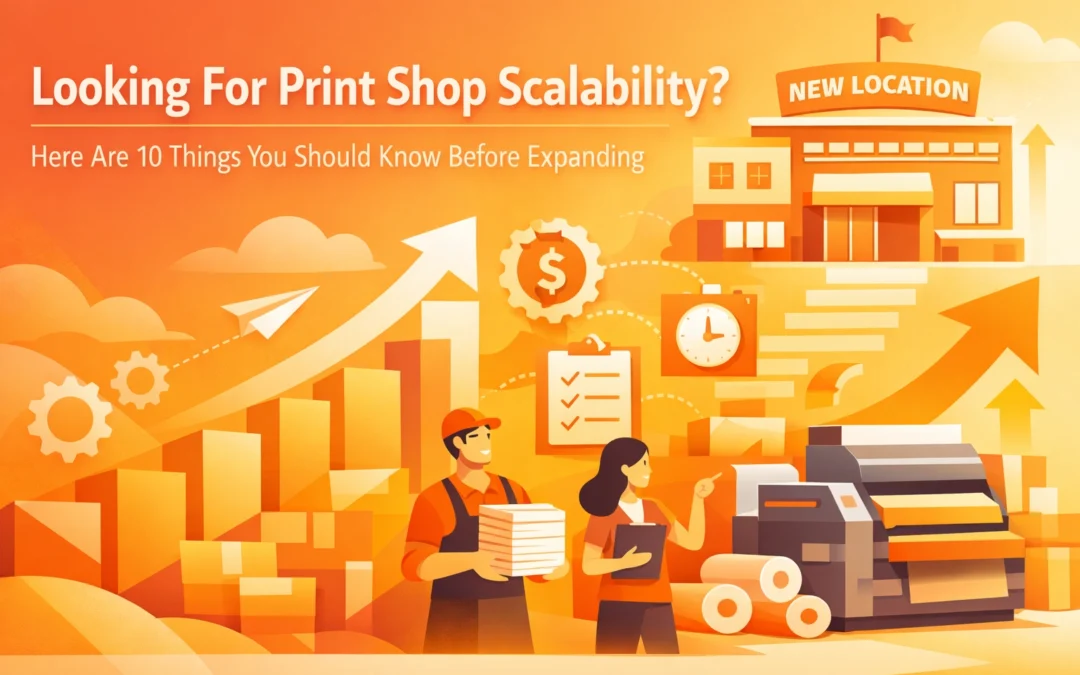
Growth in the print industry requires more than purchasing additional equipment or hiring extra staff. Scalability demands strategic planning, process optimization, and a clear understanding of how expansion impacts every facet of your operation. Many print shops rush into growth without addressing fundamental infrastructure needs, resulting in quality issues, employee burnout, and eroded profit margins.
The difference between successful expansion and costly mistakes lies in preparation. Before you sign that lease on a larger facility or invest in new presses, consider these ten critical factors that separate sustainable growth from operational chaos.
1. Build a Comprehensive Quality Control Framework
Quality standards that work for a smaller operation often collapse under increased volume. Your quality control system must scale alongside your production capacity. Document specific procedures for each production step, from file preparation through final inspection. Create checkpoints throughout your workflow where quality verification occurs before work proceeds to the next stage.
Implement standardized measurement tools and criteria that remove subjective judgment from quality assessment. Color management protocols, registration tolerances, and finish standards should be quantifiable and consistently applied. This documentation becomes invaluable when training new staff during expansion periods.

2. Establish Cultural Foundations Early
Company culture determines how well your team adapts to change. Growth introduces new systems, revised workflows, and different communication patterns. Organizations with clearly defined values and expectations navigate these transitions more smoothly than those operating without cultural alignment.
Set standards for communication, problem-solving, and continuous improvement before expansion pressure makes cultural development an afterthought. Your team's willingness to embrace change directly impacts how successfully you can implement new processes and technologies during scaling phases.
3. Prioritize Process Automation
Automation extends far beyond production equipment. Cloud-based management systems, automated order processing, and digital approval workflows multiply your team's capacity without proportionally increasing headcount. Evaluate every repetitive task in your operation as a candidate for automation.
Consider how much time your staff spends on order entry, file preparation, customer communications, and administrative tasks. Modern workflow management systems handle these functions with minimal human intervention. This shift allows your team to focus on business development, customer relationships, and strategic initiatives that actually drive growth.
4. Anticipate Spatial Challenges
Physical expansion creates unexpected workflow disruptions. Operations that functioned efficiently in close quarters require new systems when spread across larger facilities. An approval process that involved walking 25 feet to a manager's desk becomes problematic when that distance extends to 150 feet across a production floor.
Map your current workflow with attention to physical movement and communication patterns. Identify how spatial changes will impact these interactions. You may need digital approval systems, revised communication protocols, or redesigned production sequences to maintain efficiency in a larger space.

5. Balance Equipment Investment with Human Capital
The temptation to solve capacity problems with equipment purchases overlooks a fundamental truth: qualified people and repeatable processes drive scalability more effectively than machinery alone. A new press without trained operators and optimized workflows simply creates expensive bottlenecks.
Focus hiring efforts on individuals who bring both technical skills and adaptability. Develop training programs that document best practices and create consistency across shifts and production teams. Equipment should support capable people executing proven processes, not serve as a substitute for either.
6. Identify and Eliminate Bottlenecks
Current inefficiencies multiply under increased volume. A design approval process that adds one day to turnaround time for 20 orders weekly becomes a significant problem when order volume reaches 100 weekly. Workflow mapping reveals where delays occur and helps prioritize improvements before expansion magnifies these issues.
Trace your entire operation from initial customer contact through post-delivery follow-up. Measure time spent at each stage and identify where work accumulates or waits. Address these constraints strategically, understanding that your operation's capacity equals its most restricted point.
7. Create Systematic Feedback Mechanisms
Customer perception of quality changes as you scale. Higher volumes increase variation in execution, while growth may distance leadership from day-to-day production oversight. Systematic feedback collection provides early warning when standards slip.
Implement structured review solicitation after order completion. Monitor online reviews and social media mentions for quality concerns. Track repeat customer rates and order cancellation patterns. This data highlights where expansion stresses your operation before problems become widespread.

8. Diversify Revenue Streams Strategically
Relying on existing product categories limits growth potential and increases vulnerability to market shifts. Complementary service additions serve current customers while attracting new market segments. Consider capabilities that leverage existing equipment and expertise while addressing unmet customer needs.
Sustainable printing options appeal to environmentally conscious clients. Grand format printing serves different applications than standard offset or digital work. Finishing capabilities like die-cutting or specialized binding add value without requiring completely new production systems. Each addition should align with your core competencies while expanding addressable market opportunities.
9. Expand Market Reach Through Multiple Channels
Physical expansion represents one growth path, but market expansion offers significant potential with lower capital requirements. Web-to-print platforms enable 24-hour ordering and serve geographically dispersed customers. Online marketplaces, social media selling, and retail partnerships each provide access to different customer segments.
Multi-channel strategies require integrated systems that maintain inventory accuracy and order tracking across platforms. Consider how order management, customer communication, and fulfillment logistics function when selling through multiple channels simultaneously. Technology integration separates successful multi-channel operations from logistical nightmares.
10. Match Growth Pace to Team Capacity
Marketing can generate demand faster than your operation can effectively serve it. Aggressive customer acquisition that outpaces production capacity or support team capabilities damages quality, lengthens lead times, and erodes customer satisfaction. Growth should align with your organization's ability to maintain standards and deliver positive customer experiences.
Evaluate current utilization rates across all functions, not just production. Customer service, design support, and quality control teams must scale alongside production capacity. Imbalanced growth creates dysfunction that undermines expansion benefits and potentially damages your reputation in the market.

The Foundation of Sustainable Scaling
Print shop expansion requires more than additional capacity. Sustainable growth emerges from optimized processes, strong quality systems, and organizational readiness for change. Equipment and facility investments follow these foundational elements rather than leading them.
Successful scalability means operating efficiently at each stage of growth, not simply adding resources to compensate for inefficiency. The print shops that thrive through expansion periods are those that build systematically, addressing infrastructure needs before they become limiting factors.
Approach scaling as a strategic initiative requiring careful planning across every operational dimension. Your preparation determines whether growth strengthens your competitive position or simply magnifies existing problems at higher cost and greater risk.
Works Cited
Coleman, J. "Quality Control in Commercial Printing: Best Practices for Growing Operations." PRINTING United Alliance, 2025, www.printing.org/quality-management.
Daniels, M. "Workflow Optimization Strategies for Print Service Providers." SGIA Journal, vol. 42, no. 3, 2025, pp. 18-24.
Henderson, R. "Automation and Digital Transformation in Print Production." Print+Promo Marketing, 2025, www.printpromomarketing.com/automation-trends.
Mitchell, K. "Strategic Growth Planning for Commercial Printers." American Institute of Graphic Arts, 2025, www.aiga.org/business-growth.
Patterson, L. "Multi-Channel Sales Strategies for Print Businesses." WhatTheyThink, 2025, www.whattheythink.com/sales-channels.
Recent Comments