
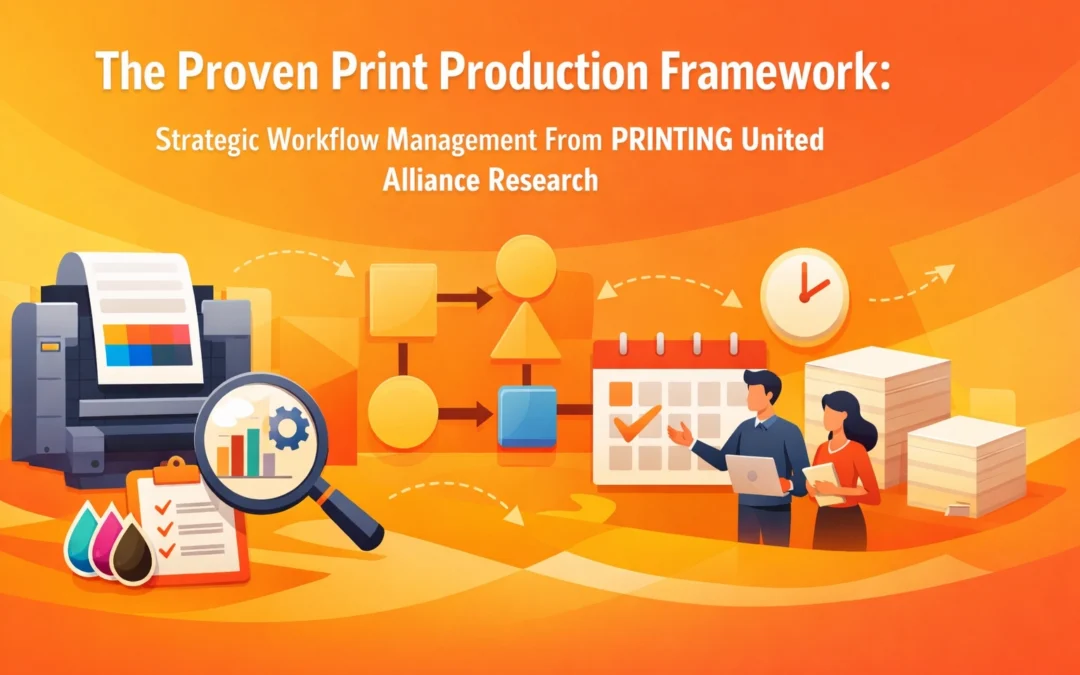
Print production workflow management has evolved from a reactive, project-by-project approach to a strategic discipline grounded in standardized processes and measurable outcomes. PRINTING United Alliance has developed comprehensive specifications and guidelines that collectively form a robust framework for modern print operations. Understanding and implementing these standards can significantly improve quality consistency, reduce waste, and strengthen client relationships.
The foundation of effective print production management rests on three core pillars: standardization, documentation, and continuous optimization. Organizations that excel in this space recognize that workflow efficiency directly impacts profitability and competitive positioning.
Establishing Color Management Standards
Color consistency remains one of the most persistent challenges in print production. PRINTING United Alliance addresses this through multiple specification systems, each designed for specific production environments and requirements.
GRACoL (General Requirements for Applications in Commercial Offset Lithography) provides comprehensive guidelines that extend beyond the press room. This specification system offers print buyers, designers, and production managers a common language for color expectations. The framework includes calibrated profiles, measurement protocols, and verification procedures that ensure predictable results across different facilities and equipment.

SWOP (Specifications for Web Offset Publications) delivers similar standardization for high-volume web offset operations. Publications that adopt SWOP specifications gain consistency across multiple printing facilities, which proves critical for national campaigns and serialized content. The standard defines specific ink density targets, dot gain curves, and gray balance parameters that create repeatability.
For operations seeking expanded color gamut capabilities, XCMYK and PrintWide Profile specifications open new possibilities. These extended gamut approaches allow printers to reproduce a broader range of colors using CMYK-based systems, reducing the need for special mixing and spot colors while maintaining brand color integrity.
Implementing The Unified Printing Taxonomy
Workflow confusion often originates from inconsistent terminology and classification systems. Different departments, software platforms, and stakeholder groups may use varying terms for identical processes or products. This linguistic fragmentation creates bottlenecks, errors, and miscommunication.
The Unified Printing Taxonomy developed by PRINTING United Alliance standardizes classification across the industry. This systematic nomenclature covers products, services, processes, and equipment categories. Production teams that adopt this taxonomy experience smoother data integration between management systems, more accurate job specifications, and clearer communication with clients.
The taxonomy particularly benefits organizations with diverse service offerings. A shop handling commercial printing, wide format, and specialty applications can use consistent language across all divisions. This standardization extends to vendor relationships, where clear specifications reduce errors and expedite purchasing processes.
Building Knowledge Infrastructure
Technical standards mean little without the workforce knowledge to implement them correctly. PRINTING United Alliance supports this need through its iLEARNING+ platform, which provides structured education aligned with industry best practices.

Training investments often face scrutiny during budget reviews. However, operations that prioritize systematic skill development consistently outperform competitors on quality metrics and operational efficiency. The connection between standardized training and workflow optimization becomes evident when examining defect rates, rework percentages, and client satisfaction scores.
Progressive organizations integrate certification programs into career advancement paths. This approach creates clear expectations for skill development while ensuring that workflow improvements translate into sustainable competitive advantages rather than temporary gains dependent on individual expertise.
Designing Workflow Checkpoints
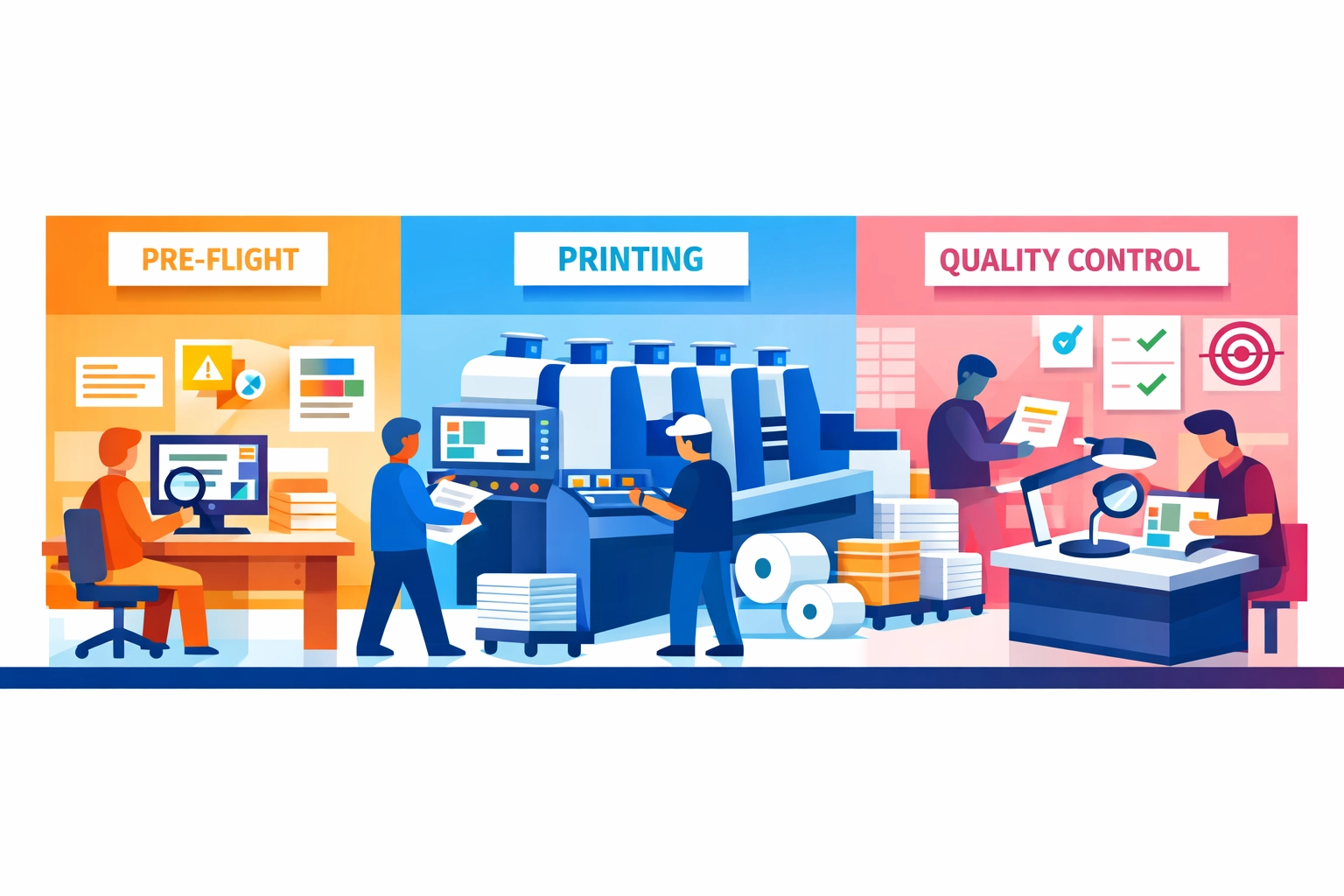
Strategic workflow management requires defined verification points throughout the production cycle. These checkpoints serve multiple purposes: quality assurance, process control, and continuous improvement data collection.
Pre-flight inspection represents the first critical checkpoint. Comprehensive file analysis at this stage catches resolution issues, color space problems, and font complications before they consume production time. Organizations using standardized pre-flight profiles aligned with GRACoL or SWOP specifications can automate much of this verification.
Press checks conducted according to specification standards provide objective quality assessment rather than subjective judgment. Densitometer readings, spectrophotometer measurements, and dot gain analysis create verifiable data that supports both quality control and client approval processes.
Post-production inspection completes the verification cycle. Systematic sampling protocols identify trends that may indicate equipment drift, material inconsistencies, or process variations requiring attention. This data becomes invaluable for predictive maintenance and continuous improvement initiatives.
Integrating Digital Asset Management
Modern print production generates substantial digital assets throughout the workflow. Proof files, production PDFs, color profiles, and project documentation accumulate rapidly. Without systematic organization, valuable knowledge disappears into unstructured file systems.
Strategic digital asset management connects directly to workflow efficiency. Quick retrieval of previous job specifications enables faster quoting and production setup. Archived color profiles support brand consistency across repeat orders. Production notes from completed projects inform future workflow decisions.
The taxonomy framework provides a logical structure for asset organization. Consistent naming conventions, metadata standards, and folder hierarchies reduce search time and prevent duplication. Cloud-based systems extend these benefits to remote teams and client collaboration.
Measuring Workflow Performance
Workflow management without measurement amounts to guesswork. Strategic operations establish key performance indicators aligned with business objectives and track them systematically.
Cycle time metrics reveal bottlenecks and capacity constraints. Tracking jobs from order receipt through delivery identifies stages where work accumulates or delays occur. This visibility enables targeted improvement efforts rather than broad initiatives that may miss the actual constraint.
First-pass yield measures the percentage of jobs that meet specifications without rework. This metric directly connects to profitability since rework consumes materials, labor, and machine time without generating additional revenue. Operations implementing standardized workflows typically see significant first-pass yield improvements.
Client satisfaction scores provide external validation of workflow effectiveness. Systematic feedback collection through structured surveys or relationship reviews captures the client perspective on responsiveness, quality consistency, and delivery reliability.
Scaling Through Standardization
Organizations pursuing growth face a fundamental question: can current workflows support increased volume without proportional staff increases? Standardization provides the answer.
Documented procedures enable faster training of new personnel. Clear specifications reduce the expertise required for routine decisions. Automated verification reduces manual inspection demands. These factors combine to improve scalability.
The framework approach also supports geographic expansion. Operations opening additional locations can replicate successful workflows rather than reinventing processes. Standardized specifications ensure consistent output across facilities, protecting brand reputation and enabling flexible capacity allocation.
Strategic Implementation Considerations
Adopting comprehensive workflow standards requires planning and commitment. Successful implementations typically follow a phased approach rather than attempting simultaneous changes across all operations.
Begin with high-volume product categories where standardization delivers immediate returns. Master those processes completely before expanding to specialty work with greater variation. This staged approach builds organizational confidence while demonstrating tangible benefits.
Involve production personnel in standard development and refinement. Front-line expertise identifies practical obstacles and improvement opportunities that management may miss. This participation also increases adoption rates and reduces resistance to change.
Budget adequate time for training and adjustment. Workflow changes may temporarily reduce output as teams learn new procedures. Planning for this transition period prevents crisis situations and maintains client commitments.
The print production framework built on PRINTING United Alliance standards offers a proven path toward operational excellence. Organizations that commit to systematic implementation gain competitive advantages through improved consistency, reduced waste, and enhanced scalability. These benefits compound over time, creating lasting differentiation in an increasingly competitive marketplace.
Works Cited
PRINTING United Alliance. "Print Properties." PRINTING United Alliance, 2026, https://www.printing.org/print-properties.
PRINTING United Alliance. "Unified Printing Taxonomy." PRINTING United Alliance, 2026, https://www.printing.org/unified-printing-taxonomy.
PRINTING United Alliance. "iLEARNING+: Education and Training." PRINTING United Alliance, 2026, https://www.printing.org/ilearning.
Recent Comments