
The question surfaces repeatedly in industry forums and print shop boardrooms: are offset presses obsolete? The short answer is no. The longer answer reveals a more nuanced reality about how production economics have fundamentally shifted in the printing industry.
The Numbers Tell a Complex Story
Global offset printing press markets reached $2,893 million in 2025 and project growth to approximately $3,362 million by 2033. These figures suggest a technology that continues to generate substantial revenue. However, context matters. Digital print is expanding its market share aggressively, projected to capture 22.5% of the global value of all print and printed packaging by 2035. That represents a jump from $167.5 billion in 2025 to $251.1 billion within a decade.
This growth trajectory indicates not the death of offset printing but rather a reconfiguration of the competitive landscape. Print service providers face decisions that require understanding where each technology delivers optimal value.
Production Economics Have Inverted for Short Runs
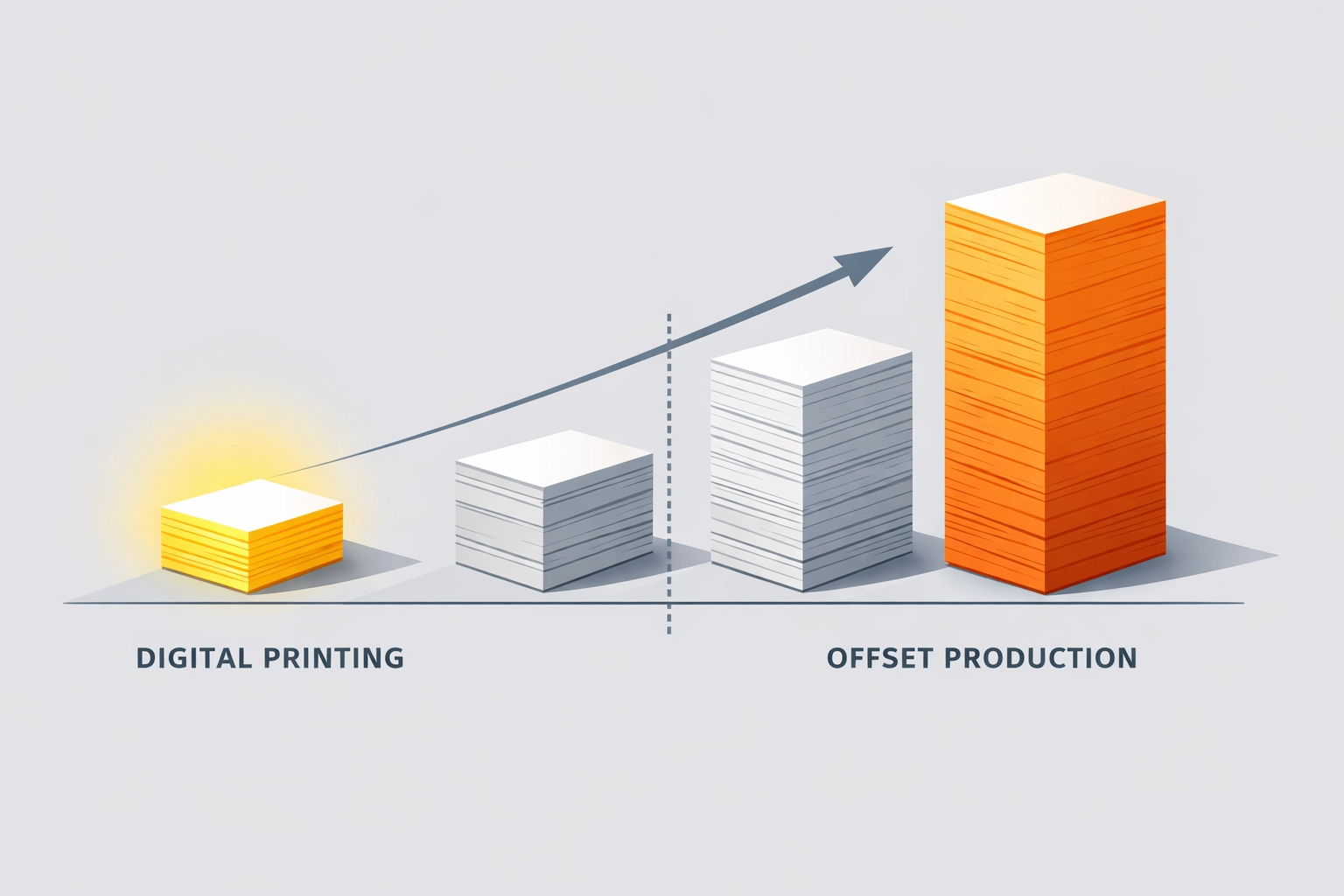
Traditional offset economics favored high-volume production. Setup costs, plate preparation, and press calibration created a cost structure that required substantial run lengths to achieve acceptable per-unit economics. A 500-piece job carried disproportionate setup costs compared to a 50,000-piece run.
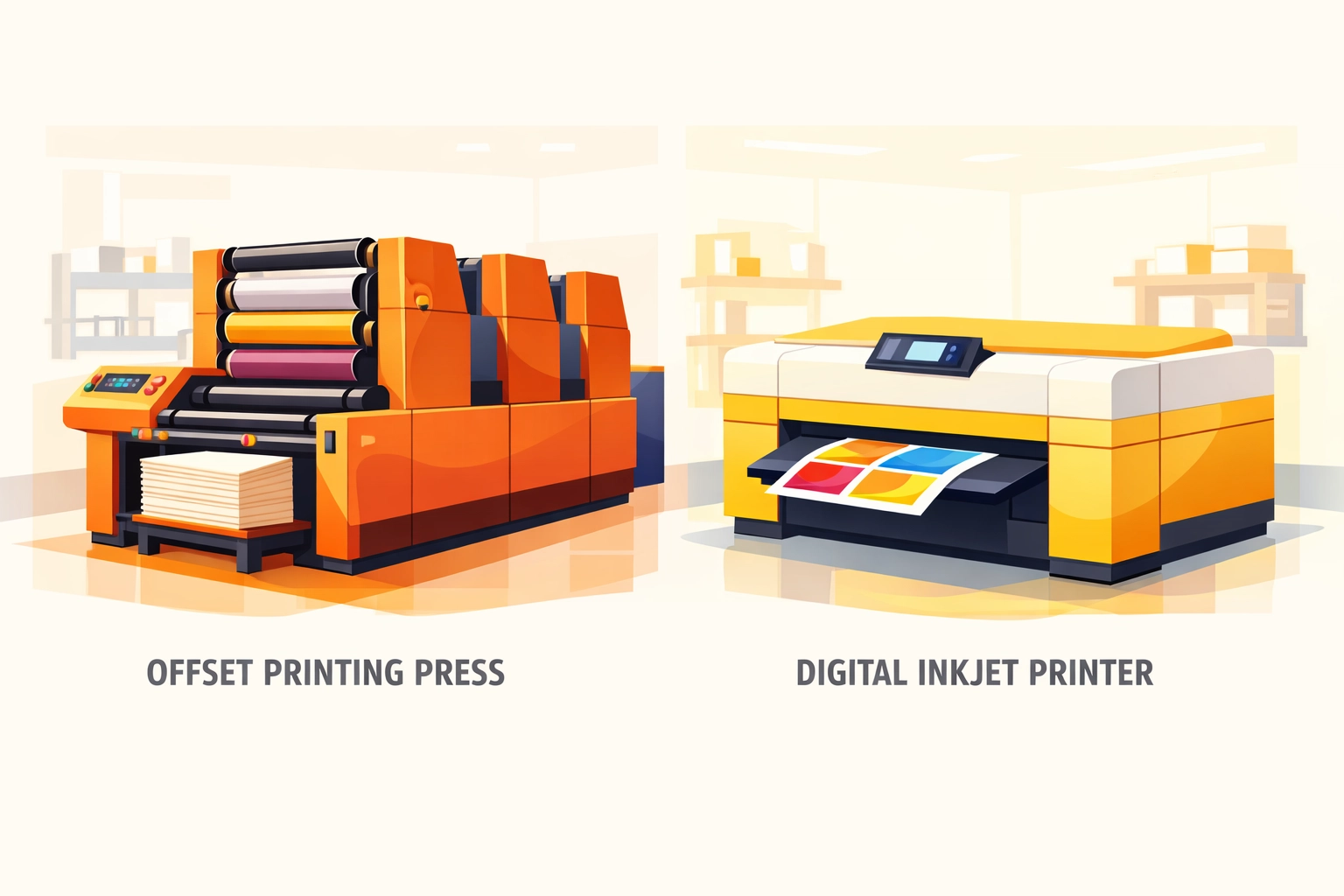
Digital technology has inverted this equation. Production inkjet systems now deliver offset-quality output without plates, with minimal setup time, and with variable data capabilities that offset cannot match. Over half of print service providers currently operate inkjet systems, with an additional 20% planning adoption by 2026. The migration carries tangible benefits. Printers report an average 9% reduction in paper waste and 8% increase in profit margins after transitioning inkjet-capable work from offset platforms.
The breakeven point between offset and digital has shifted dramatically. Jobs that once required offset for economic viability now run profitably on digital systems. Variable data printing, impossible with offset, opens revenue streams in personalized marketing, direct mail campaigns, and customized packaging.
Where Offset Maintains Economic Superiority
Declaring offset dead ignores substantial sectors where the technology remains economically dominant. High-volume standardized work continues to favor offset's per-unit cost advantages. Catalogs, magazines, newspapers, and commercial packaging for consumer goods maintain production volumes where offset delivers superior economics.
The packaging industry particularly demonstrates offset's continued relevance. Premium applications requiring vibrant color, specialty substrates, and consistent quality across massive production runs benefit from offset's capabilities. Flexible packaging, cartons, and labels for consumer products represent markets where offset maintains clear competitive advantages.
Geographic markets also reveal differentiated demand patterns. Asia-Pacific holds 44.3% of global offset printing machine market share, driven by expanding e-commerce and consumer goods sectors in China and India. These markets show robust offset investment as production volumes support the technology's economic model.
Technology Evolution Extends Offset Viability
Modern offset systems bear little resemblance to presses from previous decades. Automation, artificial intelligence integration, and energy-efficient systems have cut operating expenses while increasing productivity. Computer-to-plate technology, automated makeready, and closed-loop color control reduce setup times and improve consistency.
These advancements address traditional offset weaknesses. Faster makeready narrows the gap in setup costs compared to digital. Automated systems reduce labor requirements. Energy-efficient technologies lower operational costs. The result is a technology that continues evolving rather than stagnating.
Sustainability initiatives also drive offset innovation. Water-based inks, reduced chemical usage, and recycling systems respond to environmental pressures. Print buyers increasingly factor sustainability into purchasing decisions, and offset manufacturers have invested in technologies that address these concerns.

Strategic Considerations for Print Operations
Production facilities face strategic decisions about technology investment and capacity allocation. The question is not whether to abandon offset but how to optimize technology portfolios for changing market demands.
Diversified operations require analyzing job mix carefully. Work can be categorized into segments based on run length, customization requirements, turnaround expectations, and quality specifications. This analysis reveals which jobs run most profitably on each platform.
Short-run work below 2,500 impressions typically favors digital production. Variable data requirements mandate digital. Extremely tight turnarounds benefit from digital's minimal setup. Conversely, runs exceeding 10,000 impressions of standardized content often achieve better margins on offset. Jobs requiring specialty inks, coatings, or substrates may require offset capabilities.
The gray zone between 2,500 and 10,000 impressions requires detailed cost modeling. Setup costs, substrate prices, finishing requirements, and capacity utilization all factor into optimal technology selection. Many operations maintain both technologies specifically to handle this mixed demand.
Labor and Skill Implications
Technology transitions carry workforce implications that extend beyond equipment purchases. Offset presswork requires specialized skills developed over years of training. Color management, makeready procedures, and troubleshooting demand experience and expertise. These skills remain valuable but represent different competencies than digital production requires.
Digital production emphasizes workflow management, file preparation, and color science over mechanical press operation. Training requirements differ. Labor costs shift from press operators to prepress specialists and workflow managers. Operations transitioning from offset to digital must manage this skills evolution carefully.
Hybrid shops maintaining both technologies face the challenge of cross-training staff or maintaining specialized teams for each platform. Neither approach is inherently superior, but both carry cost and operational implications that require deliberate management.

Looking Forward: Coexistence Rather Than Replacement
The evidence suggests offset and digital will coexist rather than one technology completely displacing the other. Each serves distinct market segments with different economic characteristics. Offset continues delivering superior economics for high-volume standardized work. Digital dominates short-run, variable, and quick-turnaround applications.
Smart operations optimize technology portfolios to match market demands. Investment decisions require analyzing job mix, growth projections, and competitive positioning. Geographic location, customer base, and market specialization all influence optimal technology selection.
The question is not whether offset presses are dead but rather how print operations strategically deploy multiple technologies to serve diverse market segments profitably. Production economics have shifted, creating new opportunities for operations that understand where each technology delivers optimal value. The future belongs to print providers who master technology selection and workflow optimization rather than those committed to any single production method.
Works Cited
Smithers Pira. "The Future of Global Printing to 2035." Smithers, 2025. https://www.smithers.com/services/market-reports/printing/the-future-of-global-printing-to-2035
PRINTING United Alliance. "Digital Print Technology: Market Trends and Adoption Rates." PRINTING United Alliance Research, 2025. https://www.printing.org
Keypoint Intelligence. "Production Inkjet Systems: ROI and Operational Benefits." Keypoint Intelligence InfoTrends, 2025. https://www.keypointintelligence.com
Market Research Future. "Offset Printing Press Market Research Report: Global Forecast to 2033." Market Research Future, 2025. https://www.marketresearchfuture.com
Recent Comments