
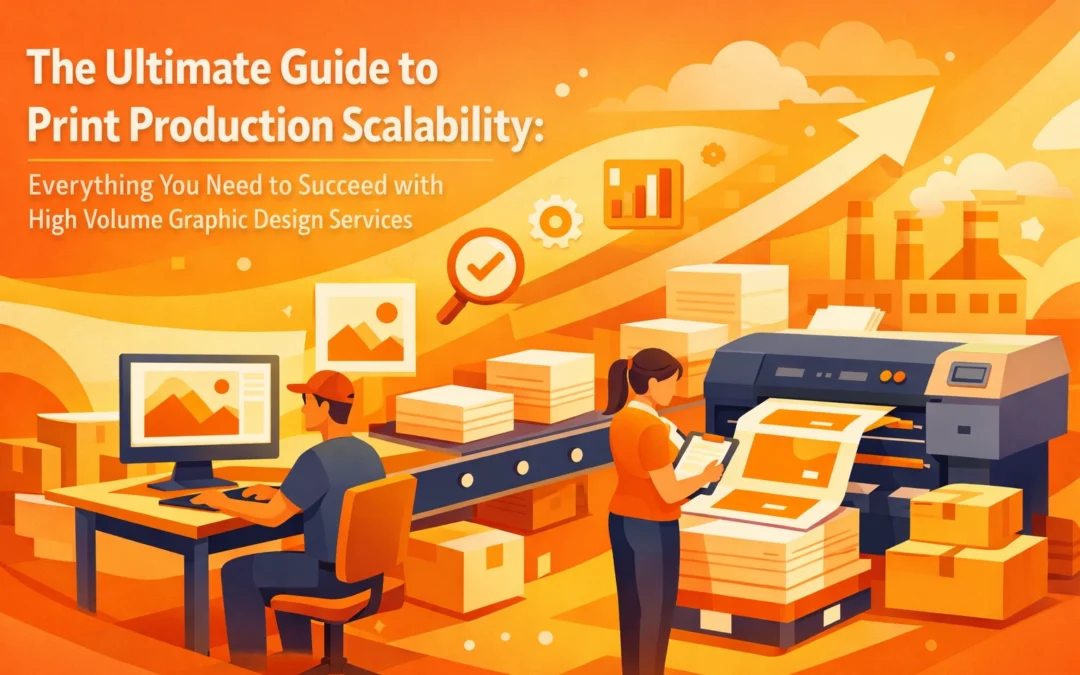
Scaling a print production operation from a small boutique shop to a high volume powerhouse requires more than just purchasing faster machines. It demands a fundamental shift in business philosophy, operational strategy, and technological integration. For companies like Creative Design Hub (84G), scalability is the bridge between creative potential and market dominance. When graphic design services are coupled with high volume print production, the complexity of maintaining quality while increasing output grows exponentially. This guide examines the strategic pillars necessary to manage this growth effectively.
The Foundation of Technological Integration
Modern print production relies heavily on the marriage of hardware and software. Traditional methods that depend on manual intervention at every stage are inherently unscalable. To transition into high volume services, firms must invest in advanced printing technologies such as Direct-to-Garment (DTG), Direct-to-Film (DTF), and high speed UV printing. These technologies offer the flexibility needed for custom orders while providing the speed required for large batches.
Automation stands as the primary catalyst for growth. Manual data entry and artwork setup are the most common bottlenecks in the production cycle. By implementing cloud-based print management software, businesses can automate the transition from a client’s digital file to a print ready format. For example, integrating QR code tracking systems allows floor managers to monitor the progress of thousands of individual items in real time. This level of oversight ensures that errors are caught early in the process, preventing costly reprints and delays. You can explore how these technologies integrate into professional workflows by visiting our services page.
Standardizing Workflows and Creative Assets
Consistency is the hallmark of professional high volume graphic design. When a firm handles hundreds of unique designs daily, there is no room for ambiguity in file preparation. Standard Operating Procedures (SOPs) must be documented and strictly followed by every member of the team. These procedures should cover everything from color profile management to bleed margins and font embedding.
Creating standardized templates for common print jobs is a highly effective way to reduce preparation time. Templates ensure that the technical specifications of a project are handled automatically, allowing designers to focus on the creative aspects. For organizations looking to optimize their creative output, utilizing professional graphic design services that understand these technical constraints is essential. Standardized workflows also simplify the onboarding process for new staff. When every step of the production process is clearly defined, new hires can reach peak productivity much faster, which is vital during periods of rapid expansion.
Supply Chain Resilience and Just-In-Time Management
A scalable business is only as strong as its weakest link, which is often the supply chain. High volume production requires a steady flow of consumables, including inks, substrates, and packaging materials. Relying on a single vendor is a significant risk that can lead to total operational shutdowns if that vendor faces a shortage.
Strategic scalability involves diversifying the supplier base. By maintaining relationships with multiple vendors, a firm can ensure access to materials even during global supply chain disruptions. Furthermore, adopting a Just-In-Time (JIT) inventory management system can significantly reduce overhead costs. JIT management allows a business to receive materials only as they are needed for production, reducing the amount of capital tied up in stored inventory and minimizing the physical space required for warehousing. This lean approach to inventory requires sophisticated software that connects directly to supplier databases to provide real time updates on stock levels and shipping times.
Data-Driven Decision Making and Analytics
To scale effectively, management must move away from anecdotal evidence and toward data driven insights. Modern printing equipment often comes equipped with diagnostic tools that track performance metrics such as ink consumption, energy usage, and mechanical downtime. Analyzing this data allows firms to identify specific inefficiencies that might not be visible to the naked eye.
Performance data can reveal if a particular machine is underperforming or if certain types of jobs are consistently causing delays. By overlaying this production data with business objectives, leaders can forecast future capacity needs with high accuracy. For instance, if data shows that production capacity is consistently reaching eighty percent during peak seasons, it is a clear indicator that additional infrastructure investment is required before the next surge. Strategic planning based on these analytics prevents the reactive "firefighting" that often plagues growing businesses.

Sustainability as a Competitive Advantage
In the current industrial landscape, scalability and sustainability are no longer mutually exclusive. In fact, sustainable practices often lead to greater operational efficiency. High volume print production generates significant waste if not managed correctly. Adopting energy efficient equipment and eco friendly consumables like water based inks can reduce the environmental footprint while also lowering long term utility costs.
Designers play a critical role in sustainability by creating layouts that minimize material waste. Simple adjustments to how designs are nested on a sheet can lead to a ten percent reduction in substrate usage, which translates to massive savings when scaled across thousands of units. Promoting these sustainable practices also resonates with a growing demographic of environmentally conscious clients, providing a distinct market advantage. For those interested in the theoretical underpinnings of efficient design, our section on design theory offers deeper insights.
Human Capital and Professional Development
Technology and systems are only as effective as the people who operate them. Scaling a business requires a dedicated focus on staff development. As production volumes increase, the physical and mental demands on the workforce grow. Continuous training programs ensure that employees are proficient with the latest equipment and software, reducing the likelihood of user error.
Moreover, fostering a culture of professional growth helps in retaining top talent. In a competitive industry, losing an experienced production manager or senior designer can set a scaling plan back by months. Providing clear career paths and involving staff in the implementation of new technologies can boost morale and ensure that the team is invested in the company’s long term success. A robust portfolio is often the result of a well trained and motivated team working in harmony with advanced systems.

Infrastructure and Physical Expansion
Physical space is often the final frontier of scalability. As a business grows, the layout of the production floor must be optimized for flow and efficiency. The movement of materials from the loading dock to the printing station, and finally to the shipping department, should be as direct as possible. Minimizing the distance that workers and materials must travel reduces "muda," the Japanese term for waste in lean manufacturing.
When planning for physical expansion, it is important to consider not just the current needs but the projected growth for the next five years. Investing in a facility that is too small will result in another costly move in a short period. Conversely, a facility that is too large can lead to excessive overhead costs. Finding the balance requires a deep understanding of production capacity and a clear vision for the company’s future.
Conclusion: The Path to Strategic Growth
Successful print production scalability is the result of a holistic approach that balances technology, people, and processes. By automating workflows, diversifying supply chains, and leveraging data, businesses can handle high volume graphic design services without compromising on the quality that defines their brand. Creative Design Hub (84G) remains committed to these principles of professional excellence and strategic innovation. For more information on how we can assist with your high volume design and print needs, please visit our about us page or contact us directly.

Works Cited
AIGA. (2024). Standardizing Design Workflows for Large Scale Production. American Institute of Graphic Arts.
PRINTING United Alliance. (2025). The State of the Industry Report: Automation and Sustainability in High Volume Print. Printing.org.
TopShelf Printers. (2023). Case Study: From 6,000 to 25,000 Units: The Role of Automation in Scaling. Industry Insights.
Walker, J. (2025). Lean Manufacturing in the Creative Services Sector. Graphic Design Business Review.
Recent Comments